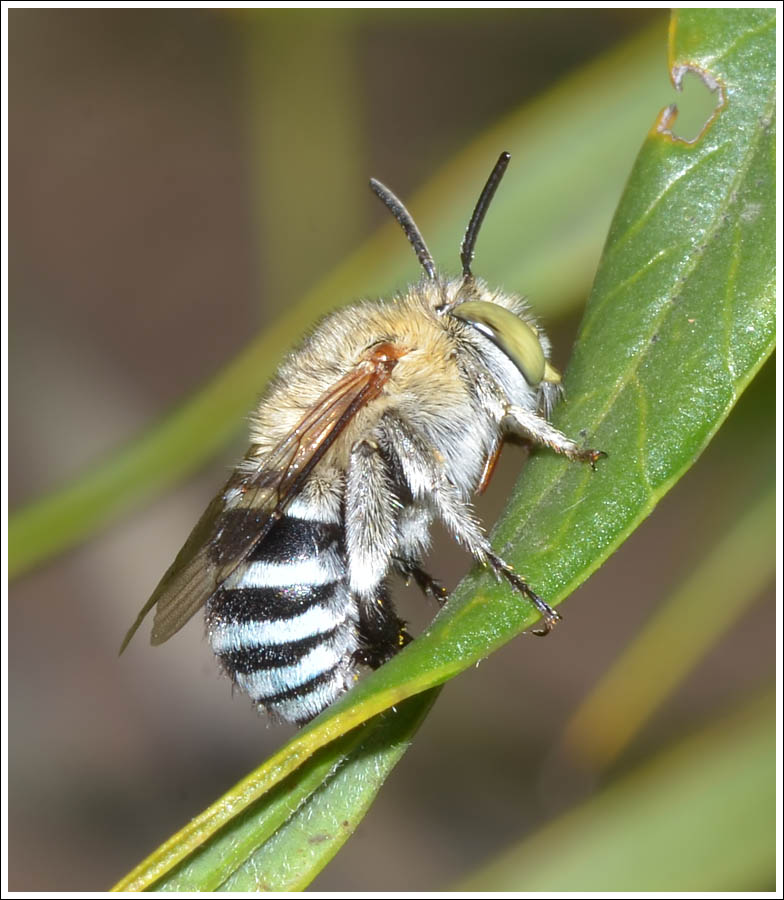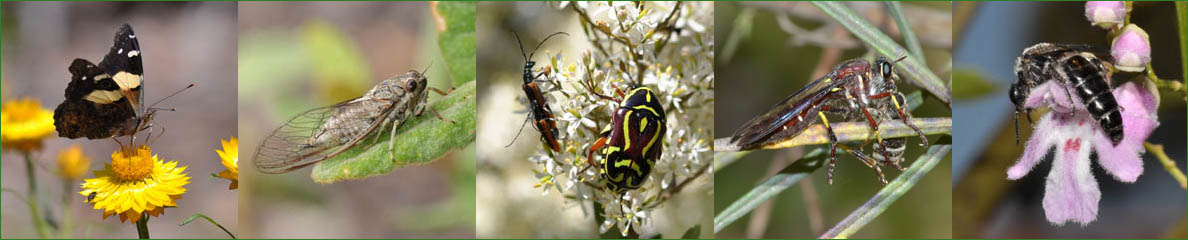
An assortment of creatures from the garden photographed over the last fortnight, starting with a mating pair of flower wasps resting on the Persoonia cornifolia, the female is wingless.


Staying with wasps, the Lemon-scented Teatree, Leptospermum petersonii has been in flower and again attracting these yellow flower wasps in numbers.

And on the trunk of a White Brittle Gum, E mannifera, a velvet ant, in actuality a very small wingless female wasp species in the family Mutillidae.

This spring and summer we’ve seen more bluebottles than ever before.

Also on a brittle gum, a stink bug making its way up to the canopy.

Butterflies are much reduced in numbers now, as are many insect species, but this Yellow-banded Dart showed up and landed for a photograph.

Leaf-curling spiders have the shrubs festooned with their webs, this one was photographed at night with its forelegs waiting for the vibration that signals a catch.

To round off this collection a very small spider with hairy legs, as yet unidentified.

Click to enlarge.