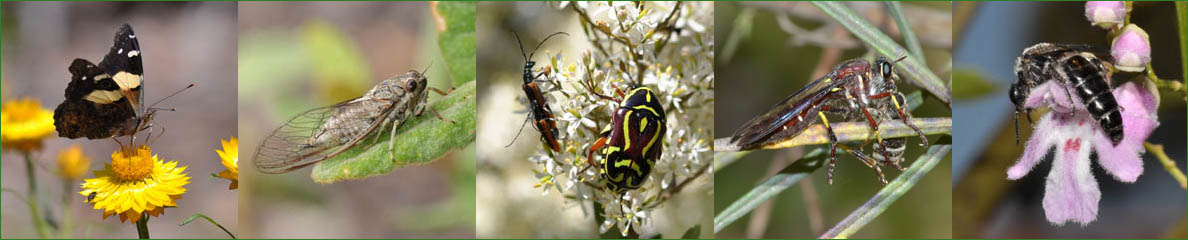
Success.

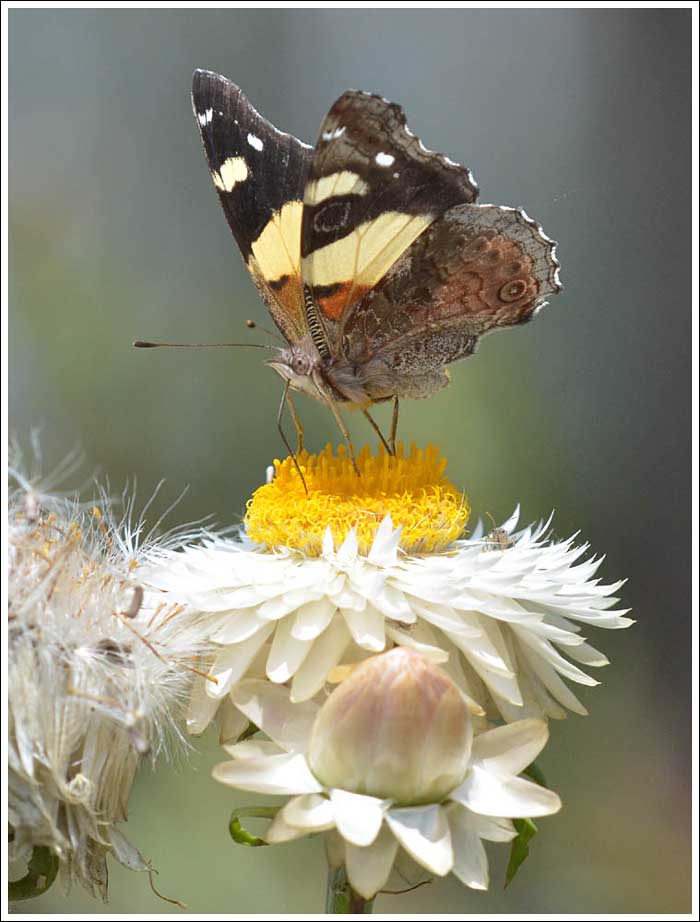
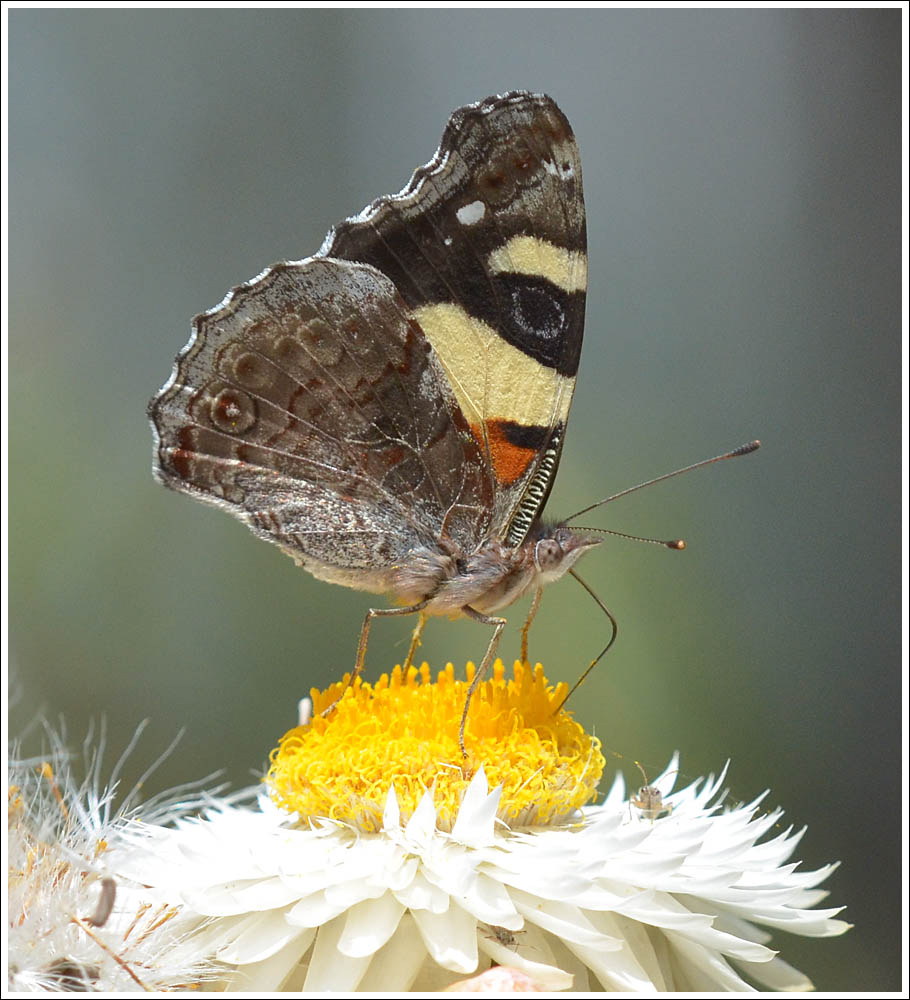
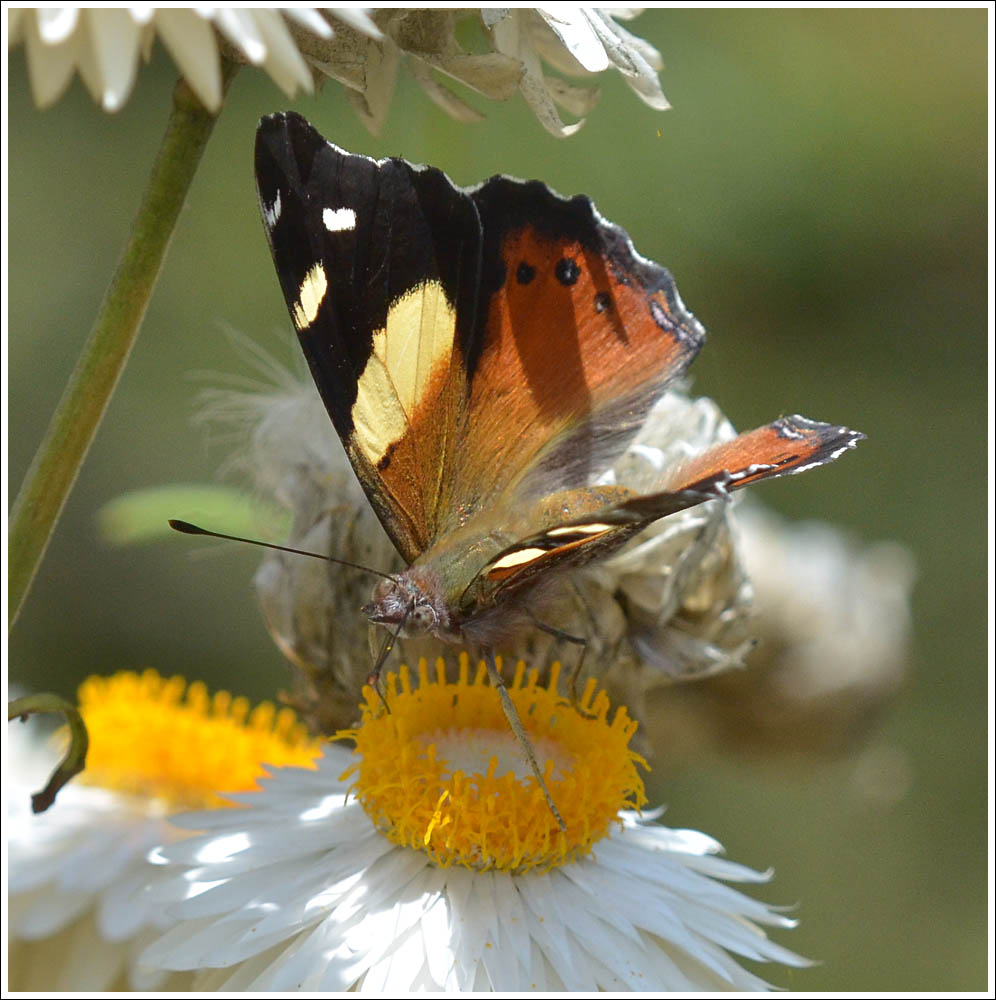
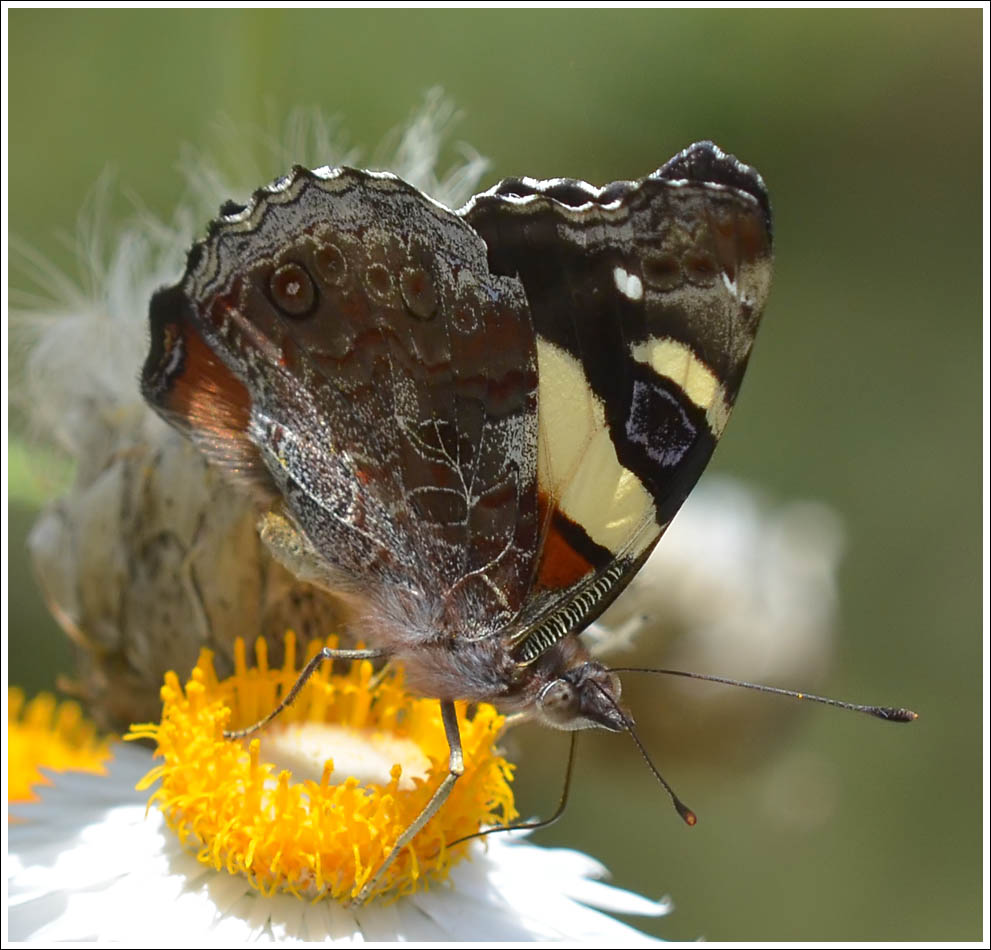
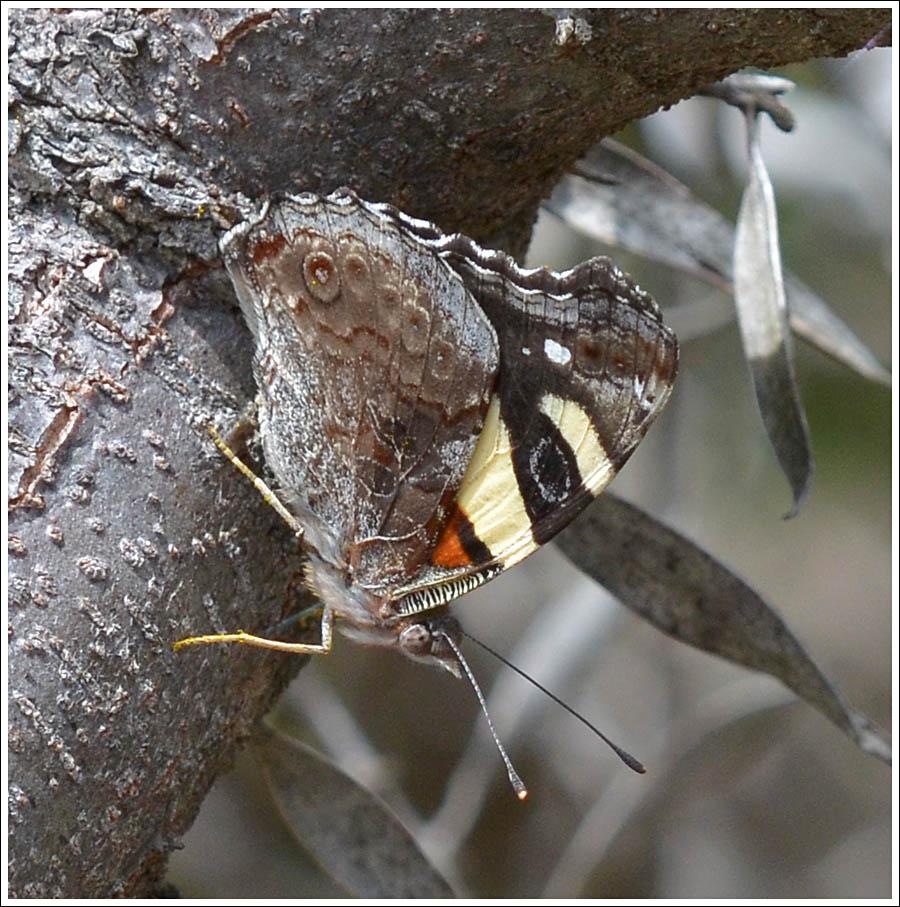
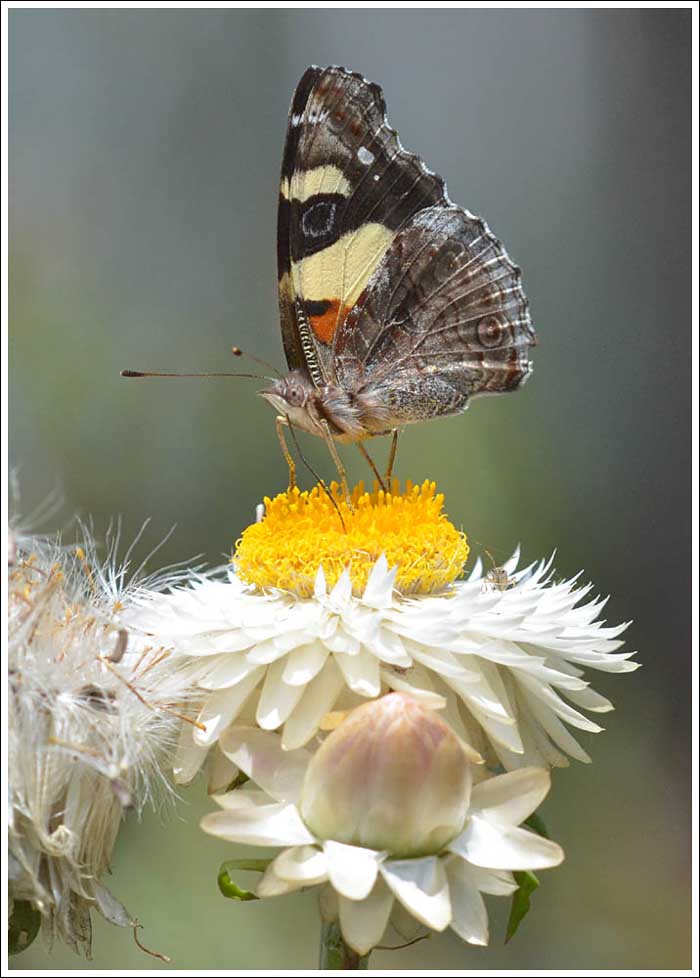
A batch of the multi-coloured Xerochrysum bracteatum was grown and planted out with the main purpose of attracting butterflies and other insects. Until now that theory had failed to be substantiated, but finally after several weeks two Painted Ladies, Vanessa kershawi were spotted nectaring briefly, and a Yellow Admiral, Vanessa itea, was also sighted. The tripod with camera attached was then set up and after a short wait patience was rewarded when two Admirals arrived and commenced feeding. The species can be wary, but by avoiding sudden movement they remained quite relaxed and plenty of shots were taken. The first to arrive perched on the hakea trunk for some time before moving to the flowers.
Four images will enlarge.
More Allsorts.

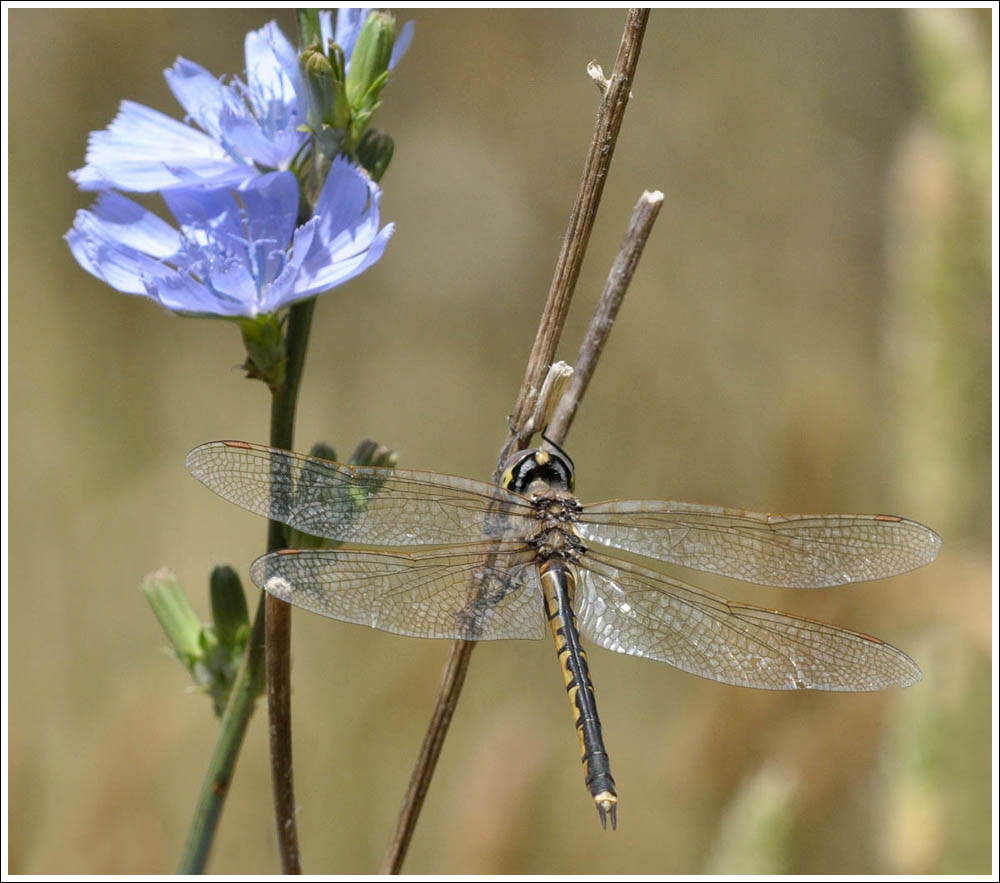
Dragonflies are often observed in numbers on the wing in clear areas with bordering vegetation, eg. open glades in the bush, tracks etc. This is so at the moment along the disused old road that wends its way through the riverside reserve, where unusual numbers of several species are in flight. A couple of hours with the 200 micro lens on the dslr resulted in pictures of Tau Emerald, Hemicordulia tau, and Blue Skimmer, Orthetrum caledonicum, with a couple of bonuses for good measure. First a Tau Emerald perched on Chicory, a common naturalised exotic plant of the area.

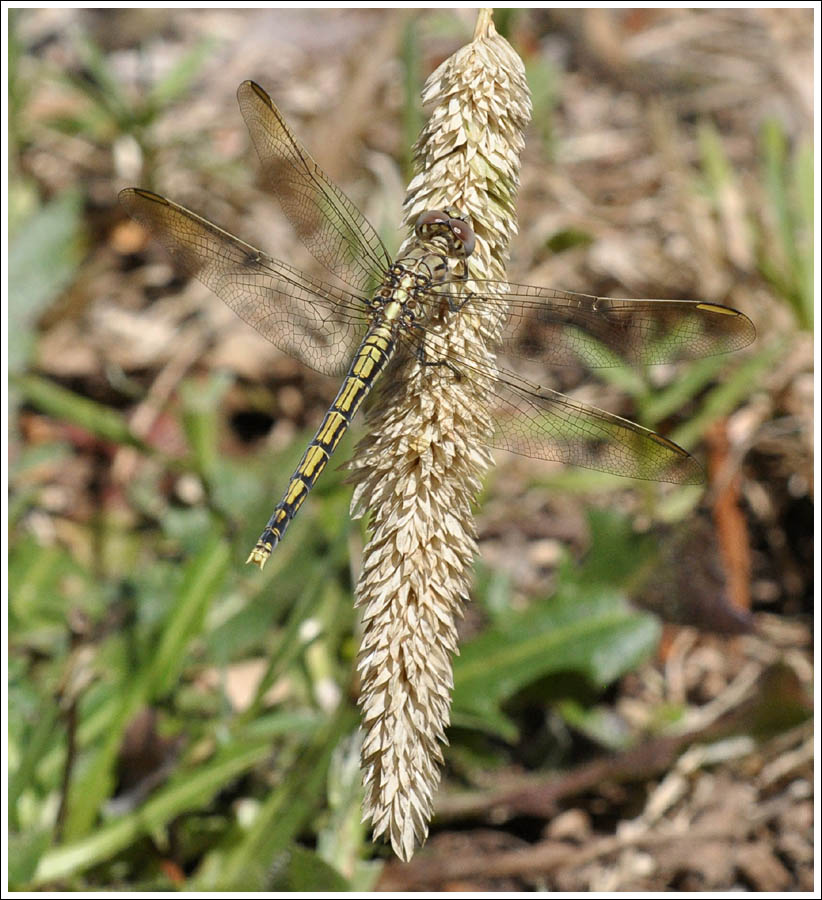
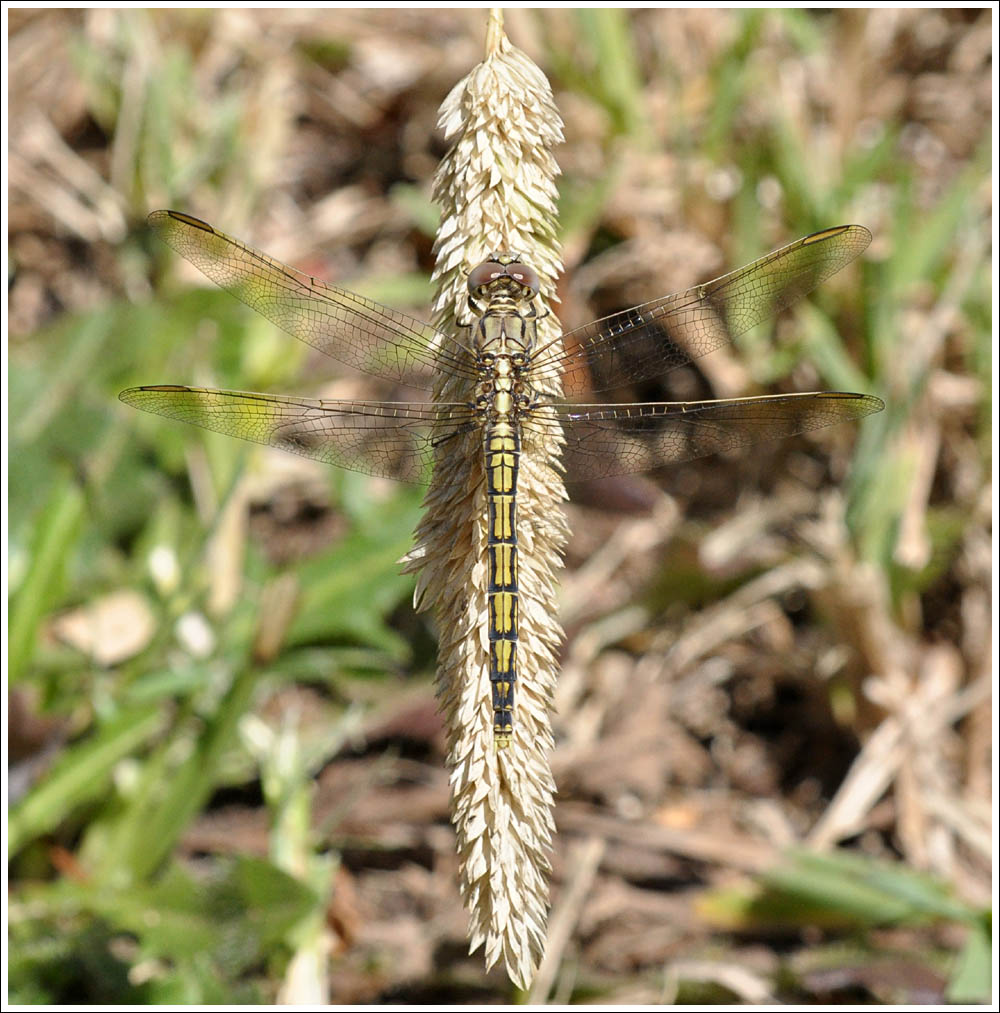
Two shots of a Blue Skimmer that was very cooperative and perched happily for pictures.

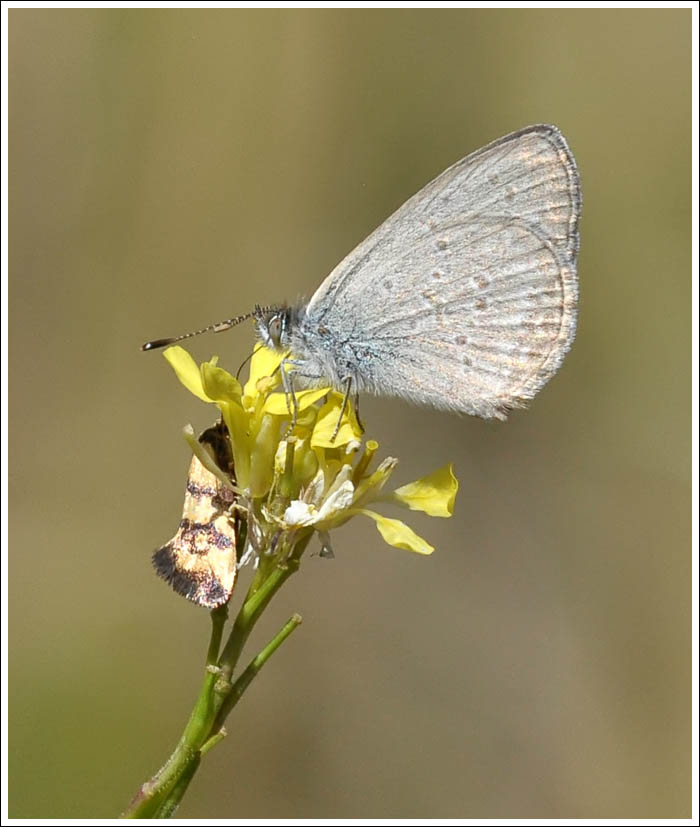
Weeds can sometimes serve a useful purpose, eg. stabilising disturbed ground, or providing sustenance or shelter for native species….

Zizina labradus nectaring, Olbonoma triptycha sheltering.

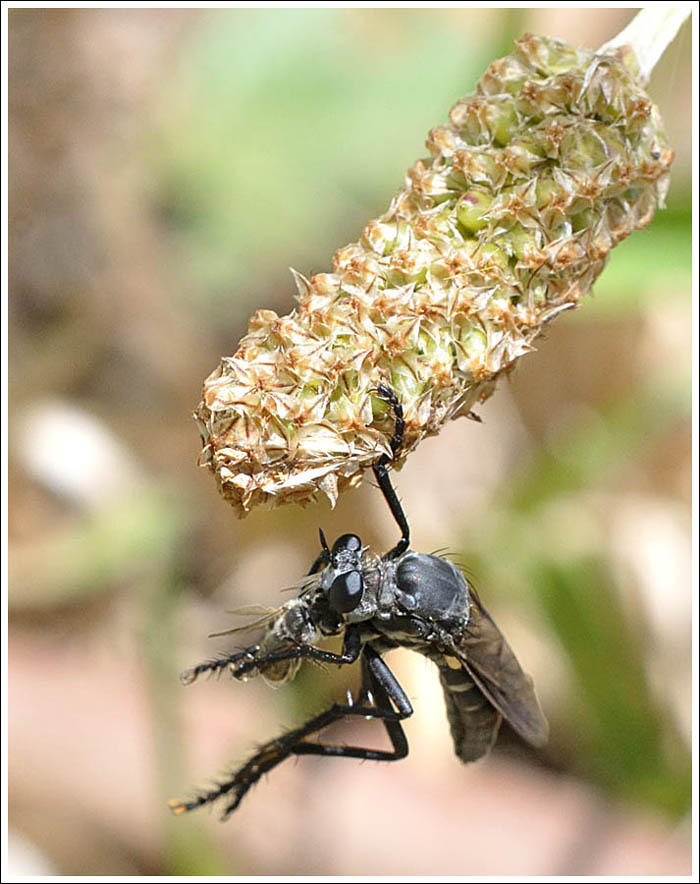
The second bonus was a robberfly, in the genus Apothechyla, hanging from one leg, (often seen in these insects), while feeding on prey.

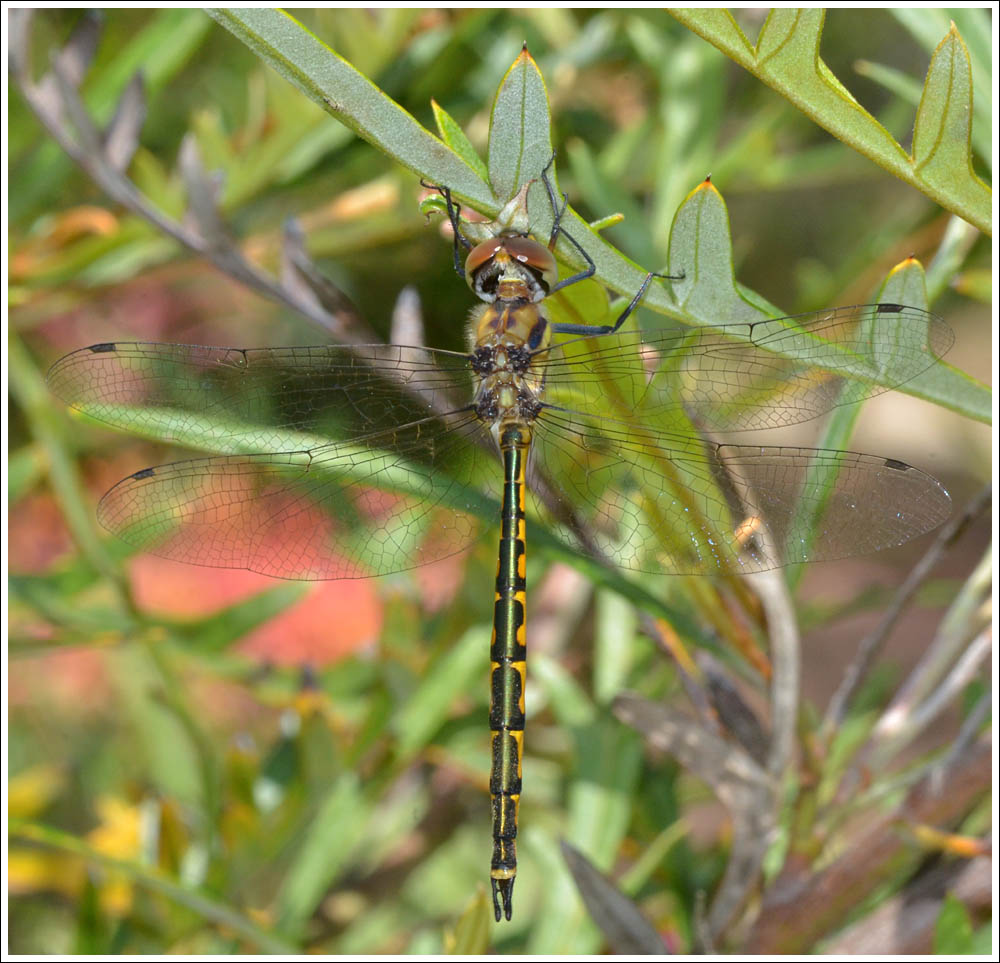
Back on home turf, an Australian Emerald, Hemicordulia australiae.

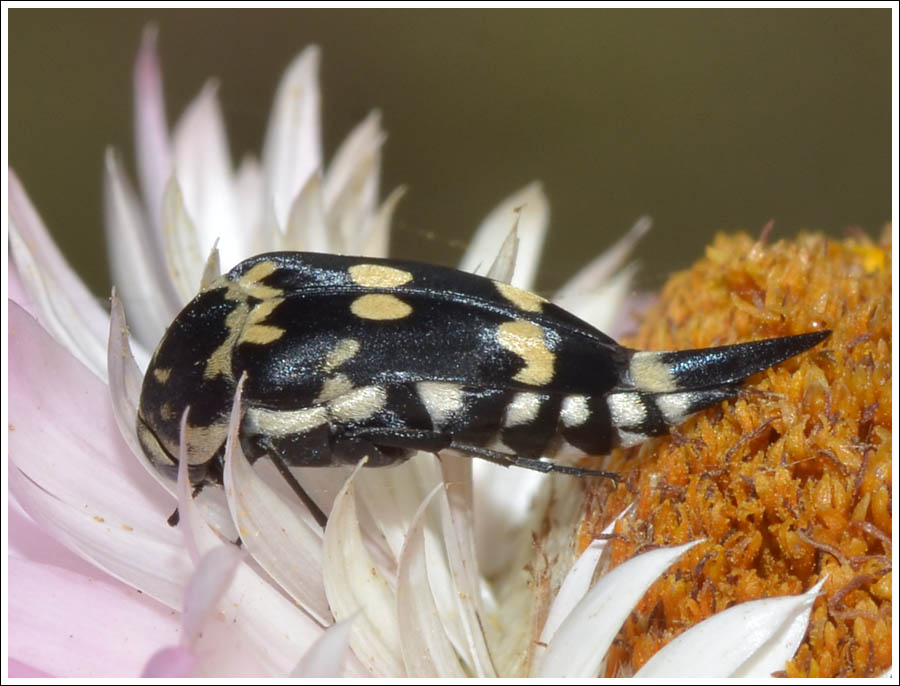
A Pintail Beetle, Hoshihananomia leucosticta.

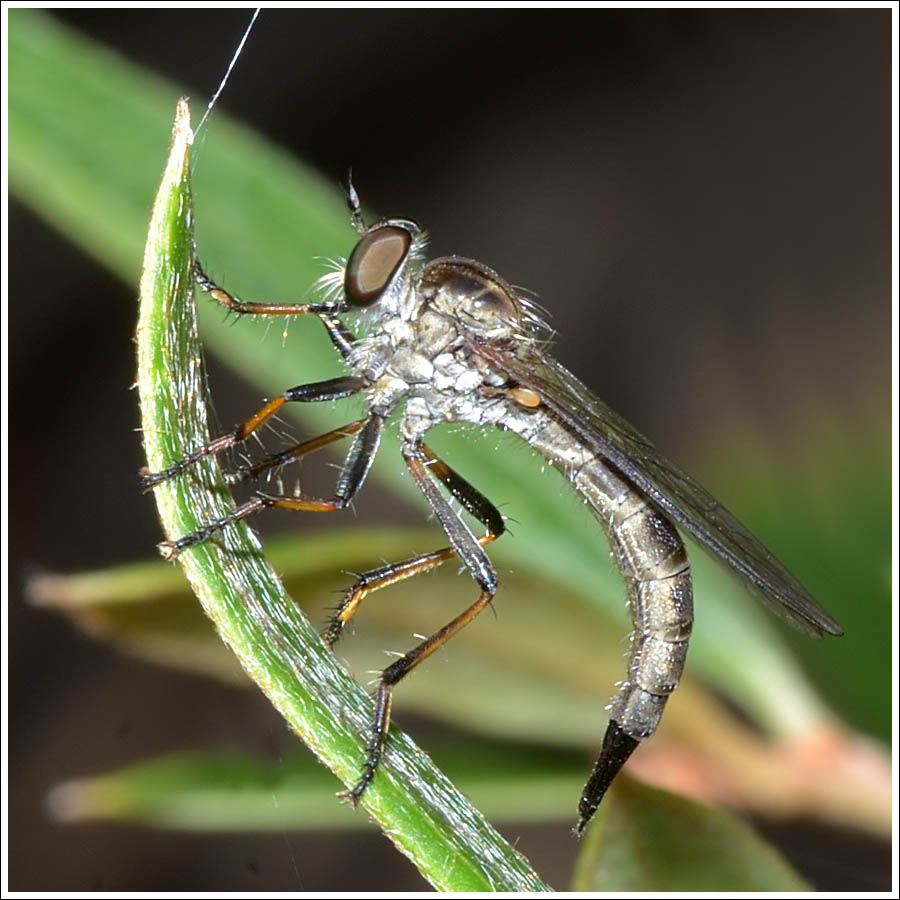
Yet another robberfly….

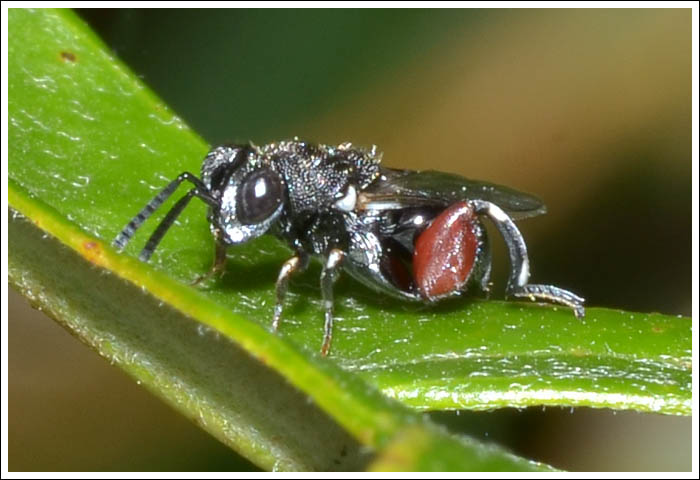
And a tiny Chalcidoid wasp, Genus Brachymeria, note the elbowed antennae.

Some images will enlarge.