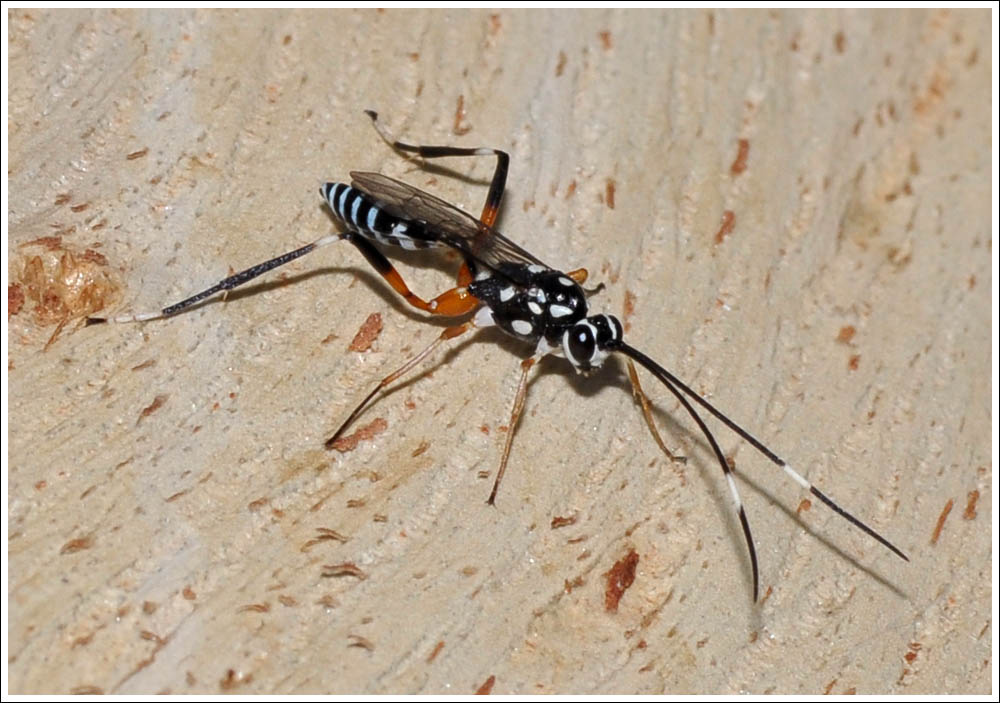
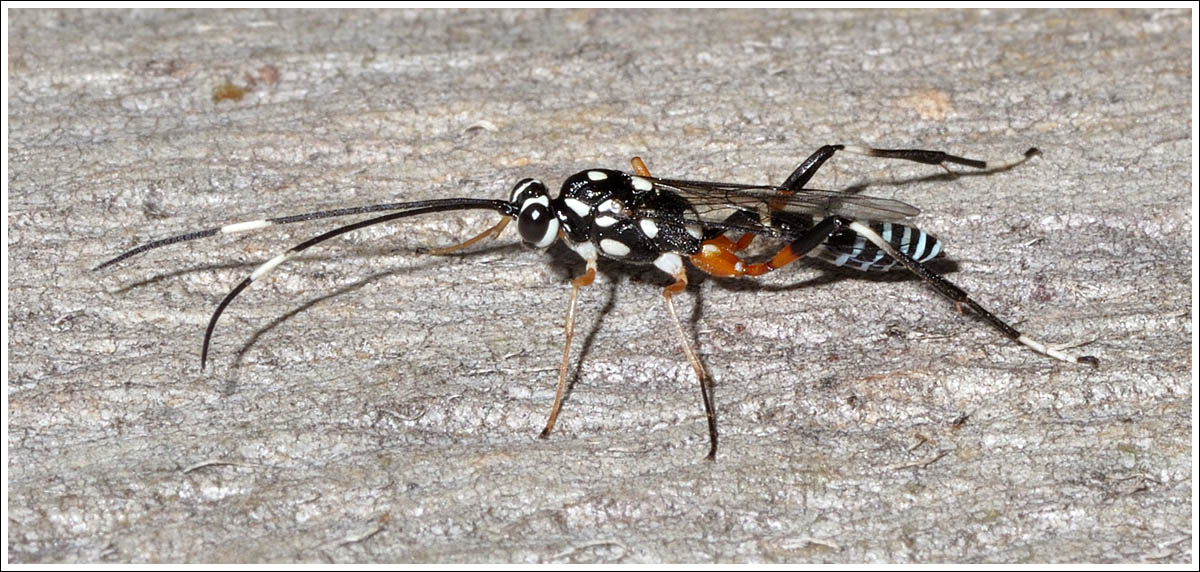
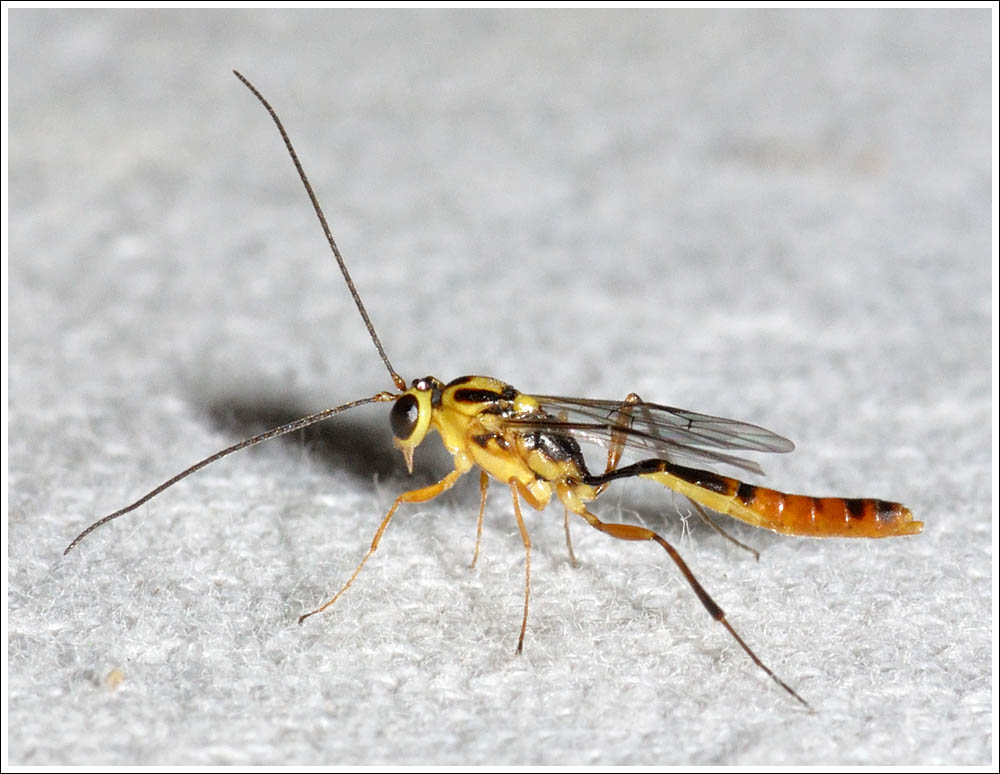
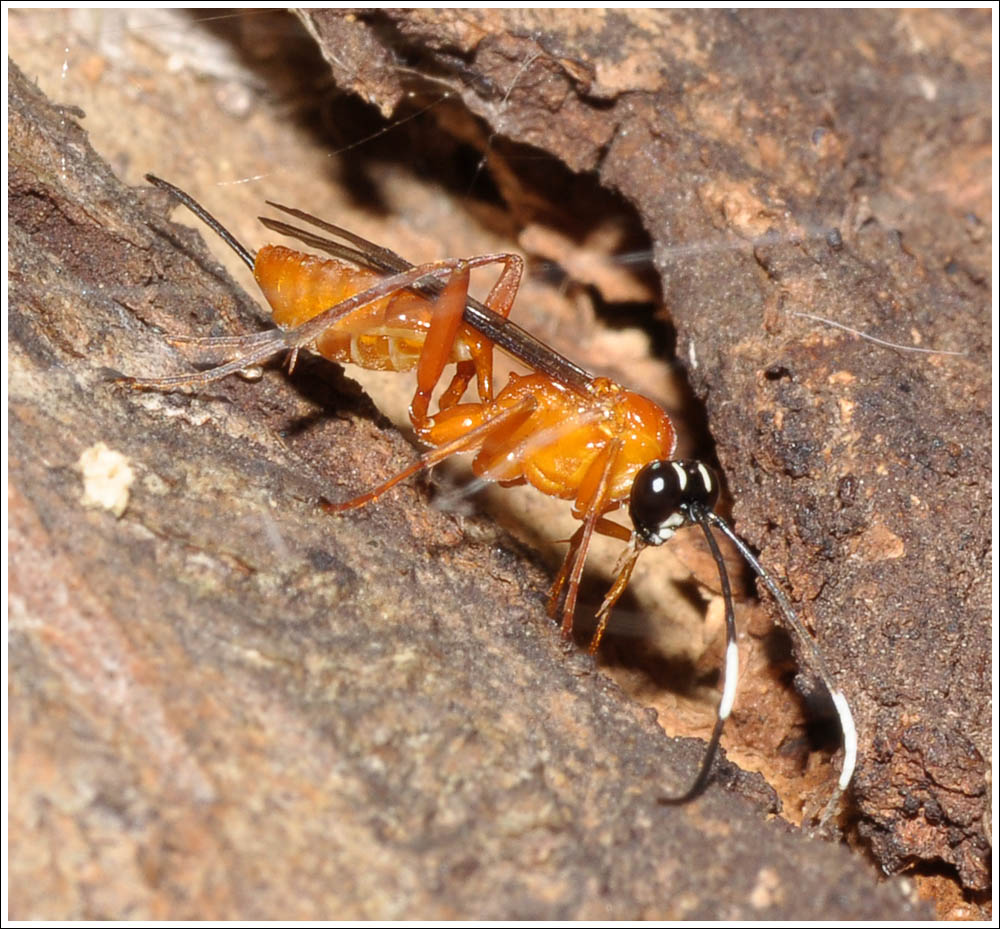
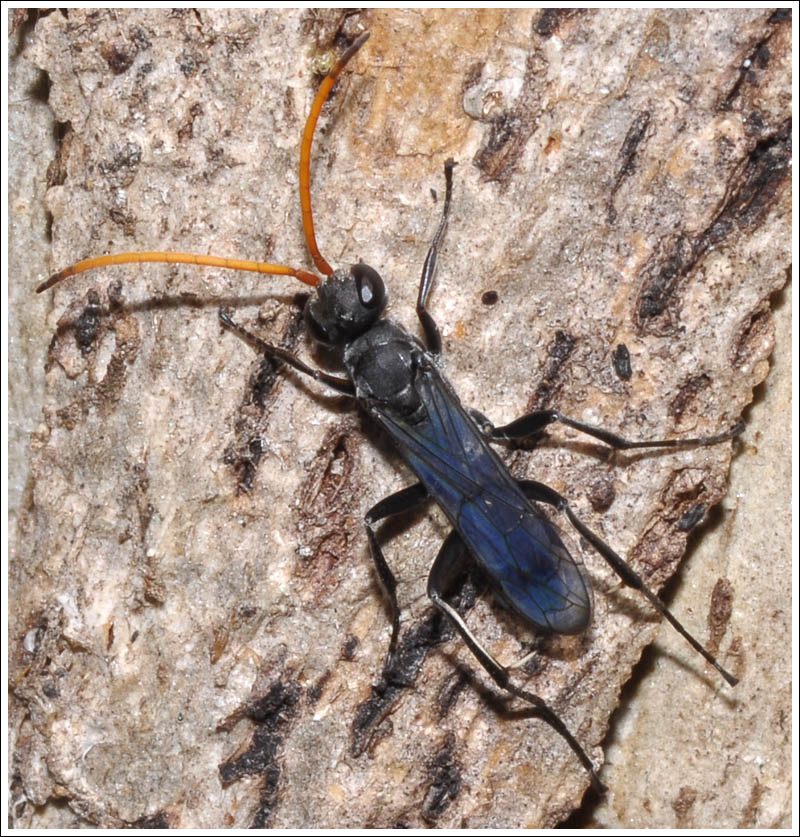
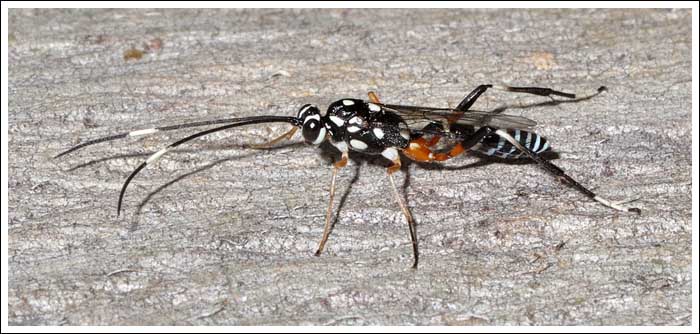
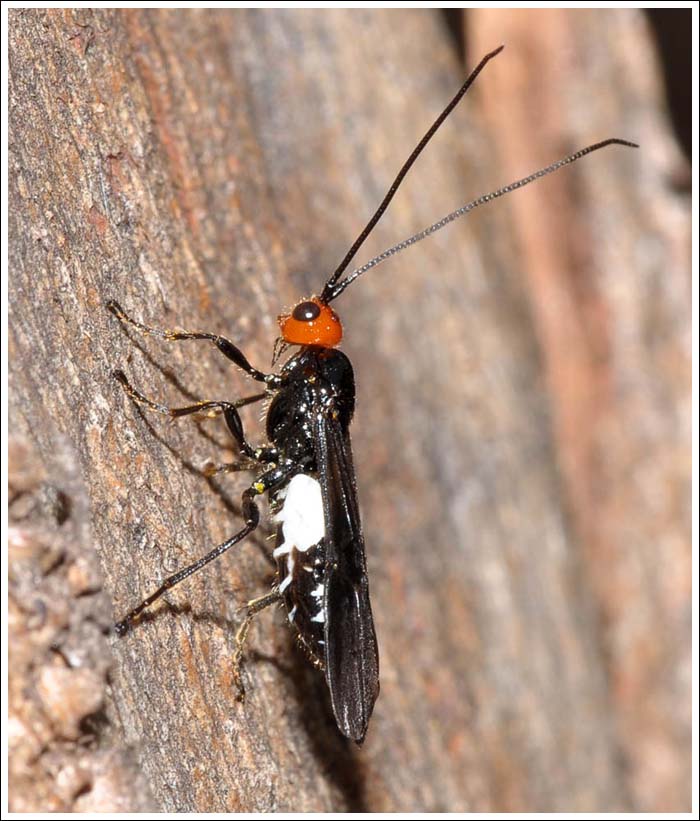
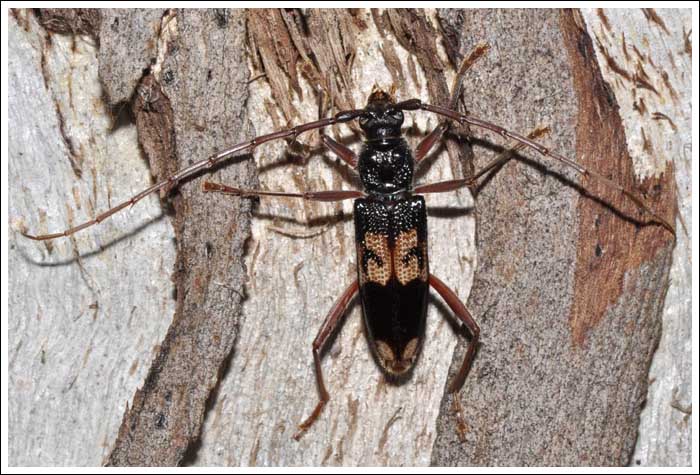
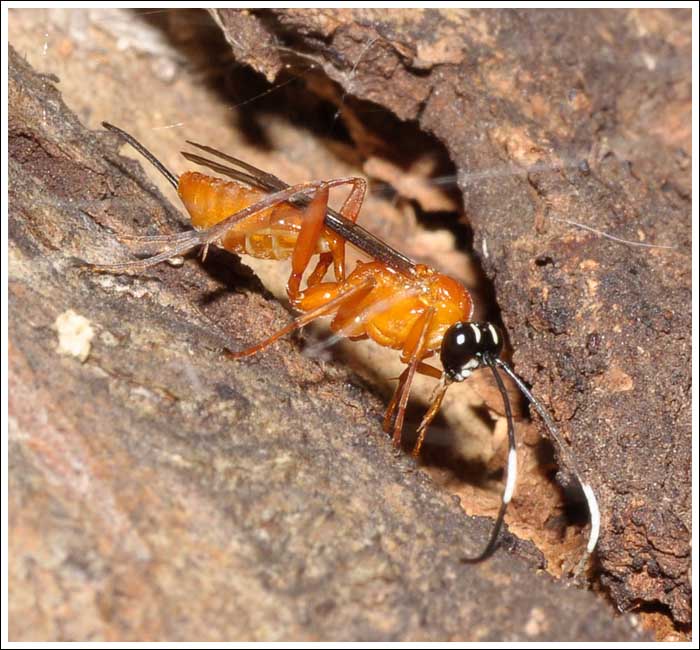
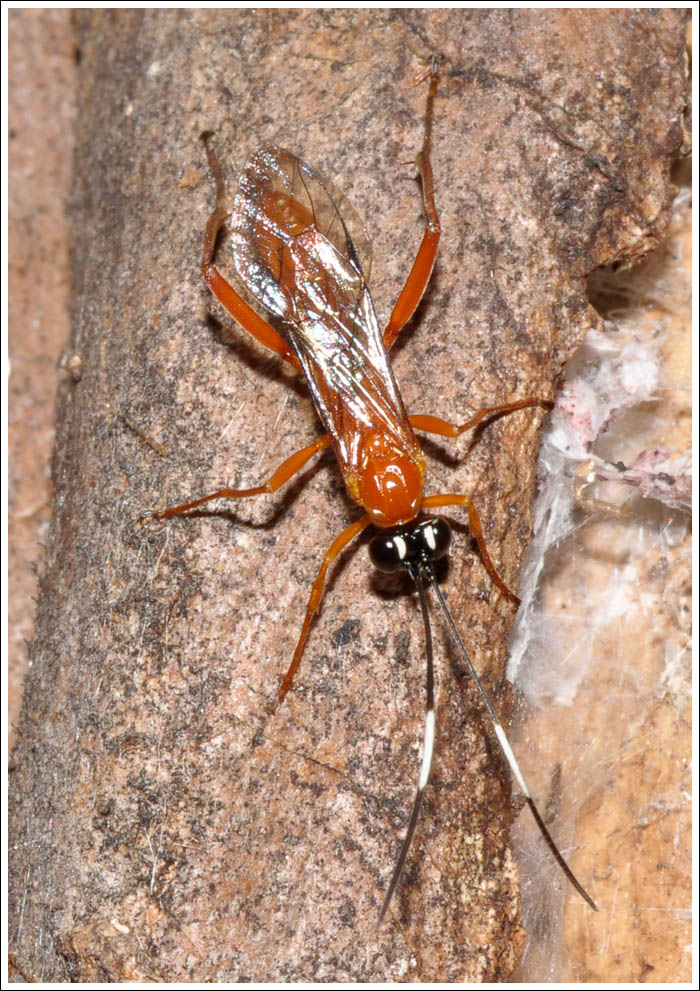
From the point of view of other insects that is, in reference to the fascinating variety of wasps found checking out the tree trunks for larvae provender. Some are spectacular in appearance, others less so but just as interesting when their life history is checked out. Interestingly, some species seem to favour specific tree species, possibly because their intended prey items are more prevalent there. Specimens of the first Ichneumonid pictured, a Gotra species, were all photographed frequenting the trunks of two garden Yellow Gums, Eucalyptus leucoxylon. Similarly, the white-flanked Braconid, Callibracon capitator also favoured these smooth-barked trees, these are known to parasitise longicorn beetles.
Gotra species.
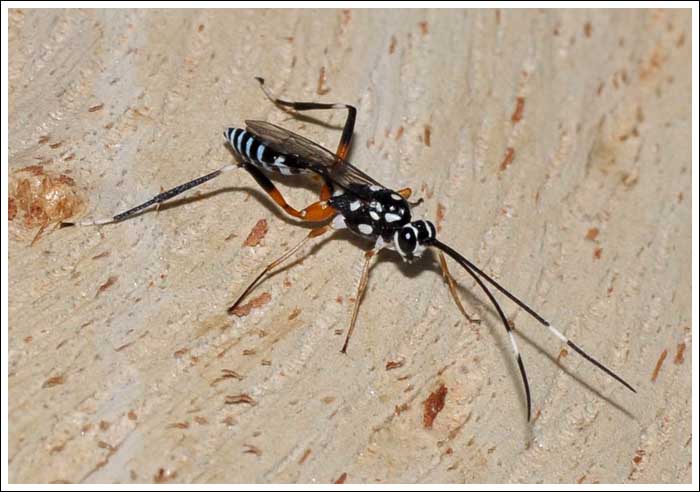
Callibracon capitator.
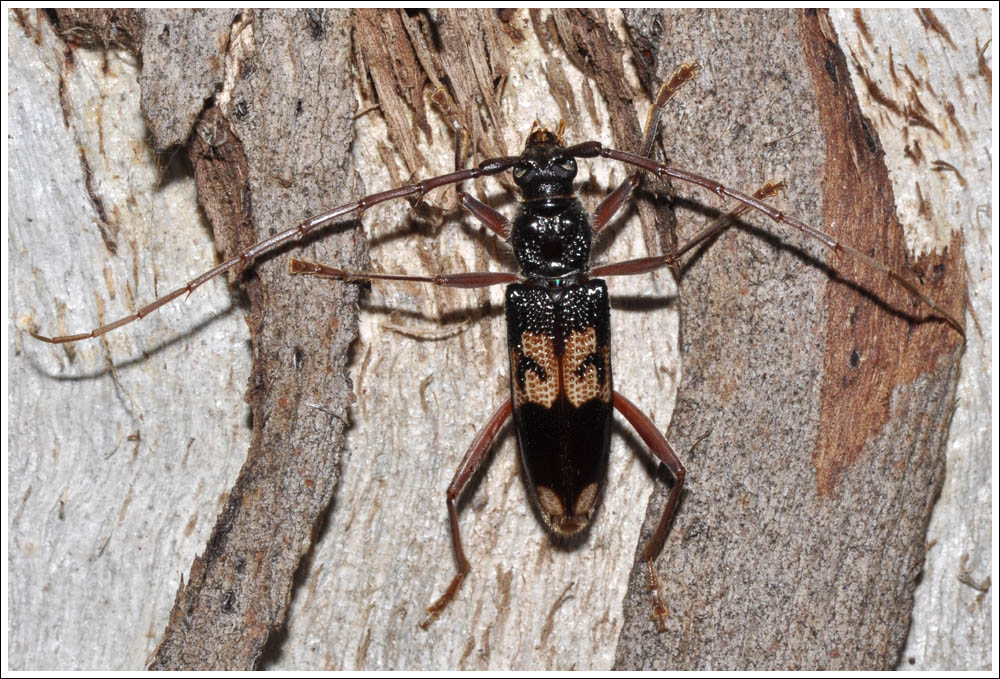
And the prey, a longicorn beetle.
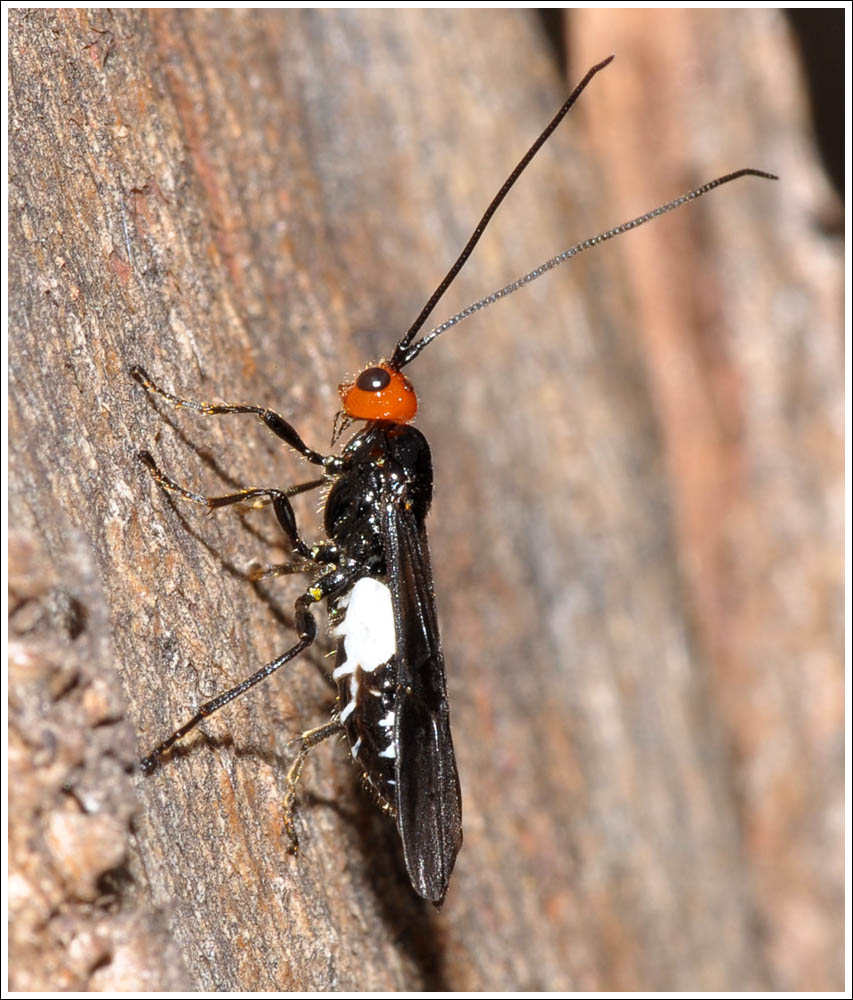
This tiny but very striking Ichneumonid came to the moth light at night. It is in the subfamily Cremastinae, they parasitise Lepidoptera and Coleoptera.
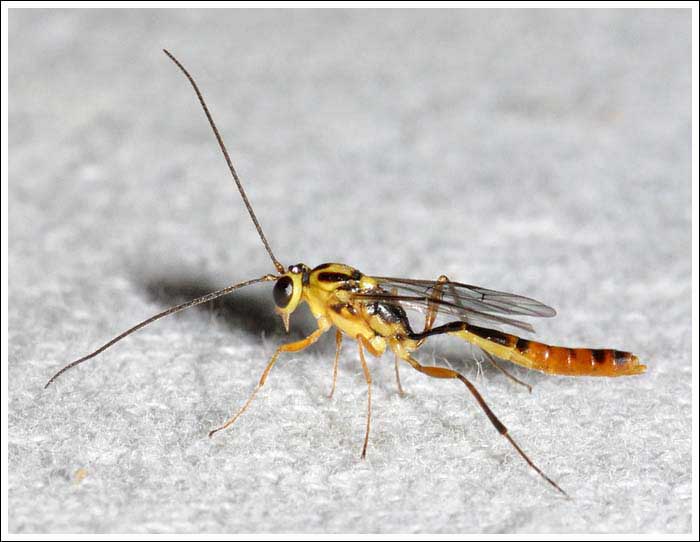
Wasps such as these can be quite wary and the photographer has to move slowly and carefully in order to avoid putting them to flight. This orange Ichneumonid was an exception to the rule, it was completely unconcerned and continued to check out every crevice and loose bark sheet no matter how close the camera approached.
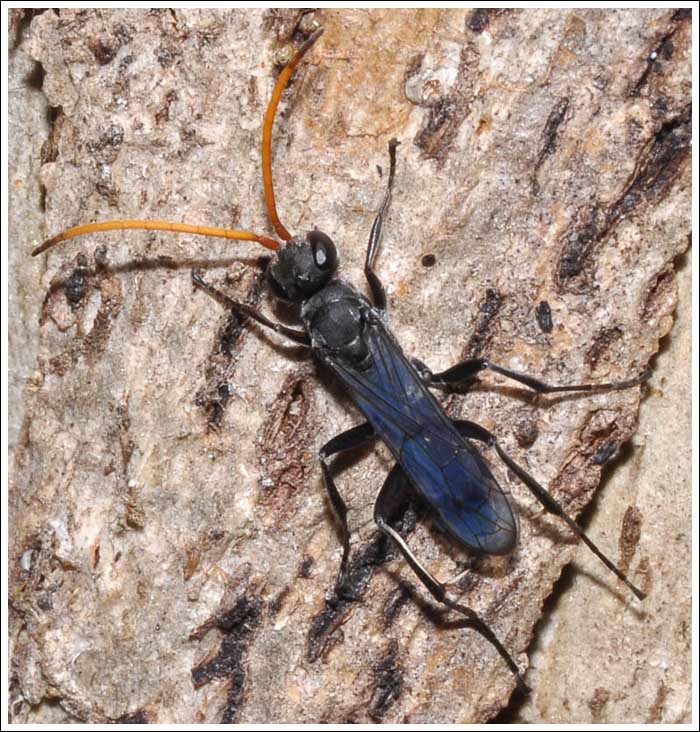
This wasp is a spider hunter in the family Pompilidae, genus Fabriogenia.
Most images will enlarge.