Little Ravens.

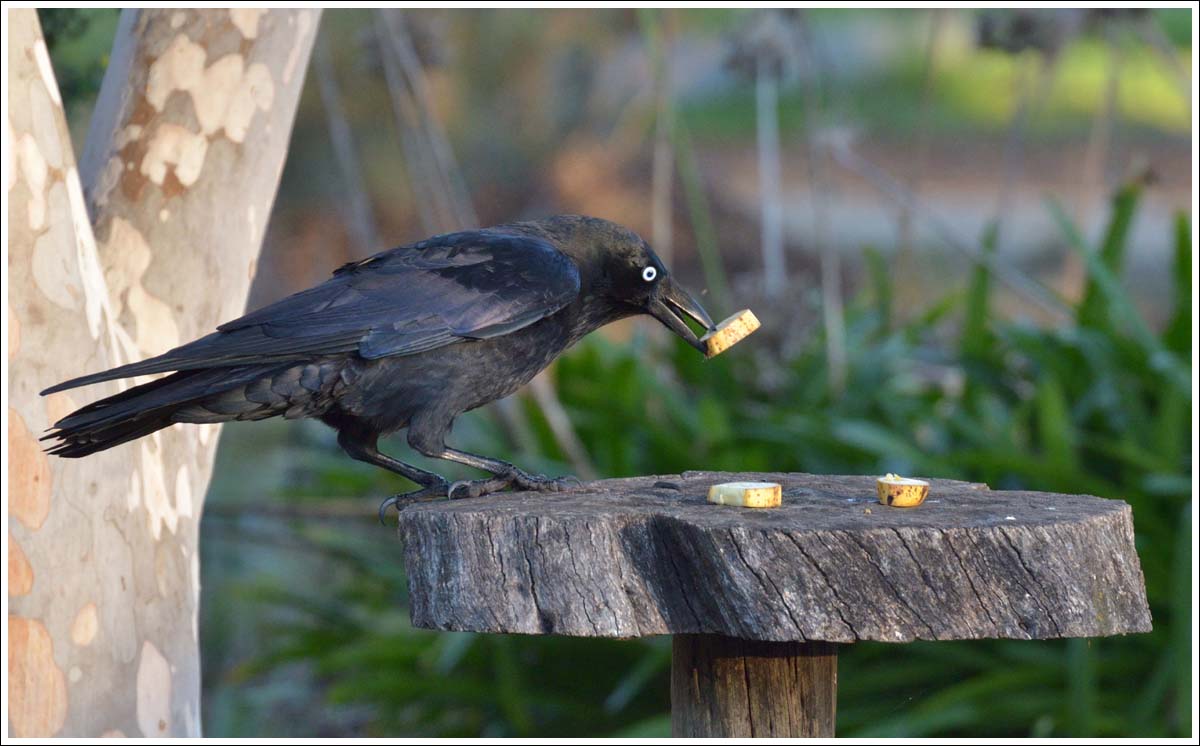
Little Ravens have called the garden home for many years, nesting in an Ironbark and Yellow Gum, and successfully raising two youngsters every year. They keep a close watch on the compost bin and feeding table for anything edible, and it is surprising what they find acceptable, fruit and vegetables go down the hatch as well as meat scraps. Orange halves that have been squeezed for juice will be collected, lodged in the hollow top of a post, and every vestige of flesh cleaned out. One season the two juveniles took a liking to developing zucchinis, with the result that the plants had to be netted. One could reasonably expect that after so many years of living cheek by jowl the ravens would become at least a little bit approachable, but no, they are as wary as ever. Satin Bowerbirds have been numerous of late, and a few grapes were put on the feeding table for them in the hope of getting photos. No chance, the two Ravens were straight down to polish them off,  so in another attempt some slices of banana were put out. The following pictures tell the story.

Hello, what has he put out now….?
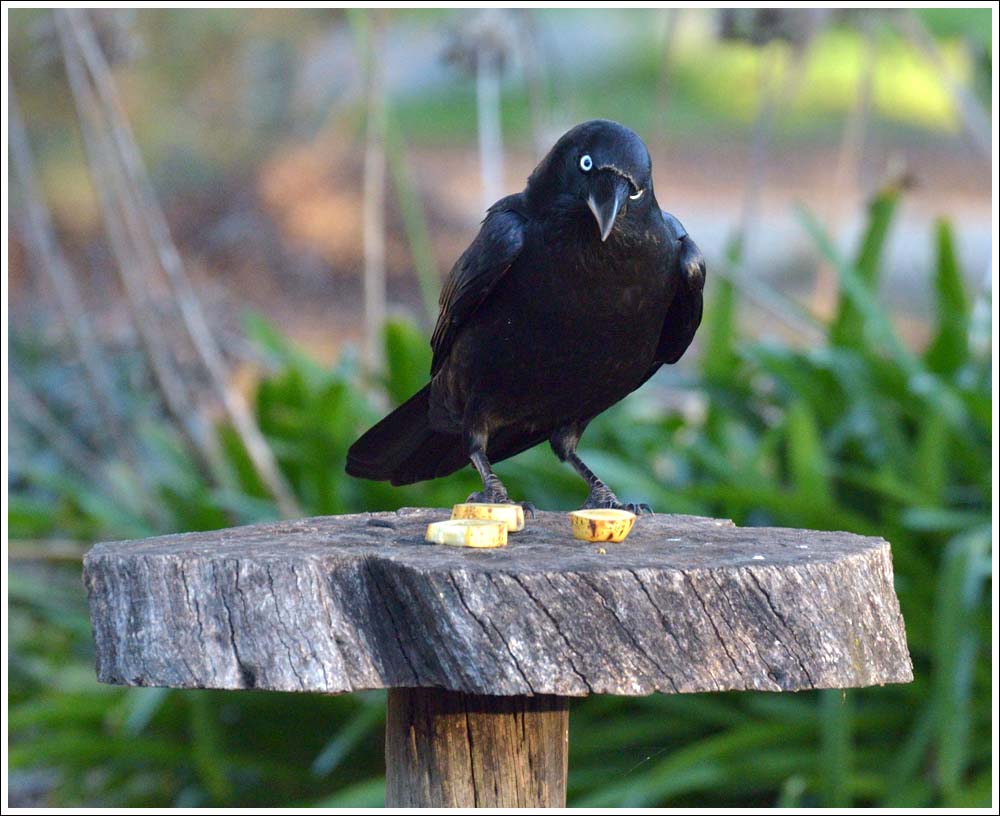
Hmmm, slices of banana, don’t know that I fancy those….
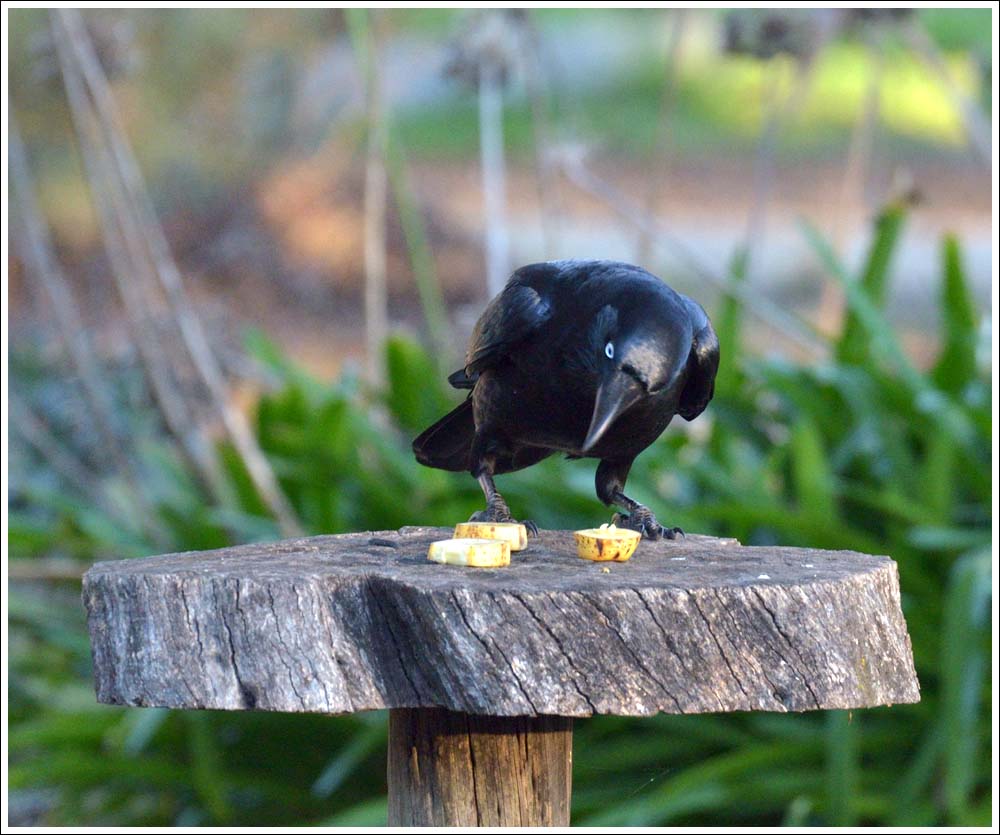
No, think I’ll give them a miss….
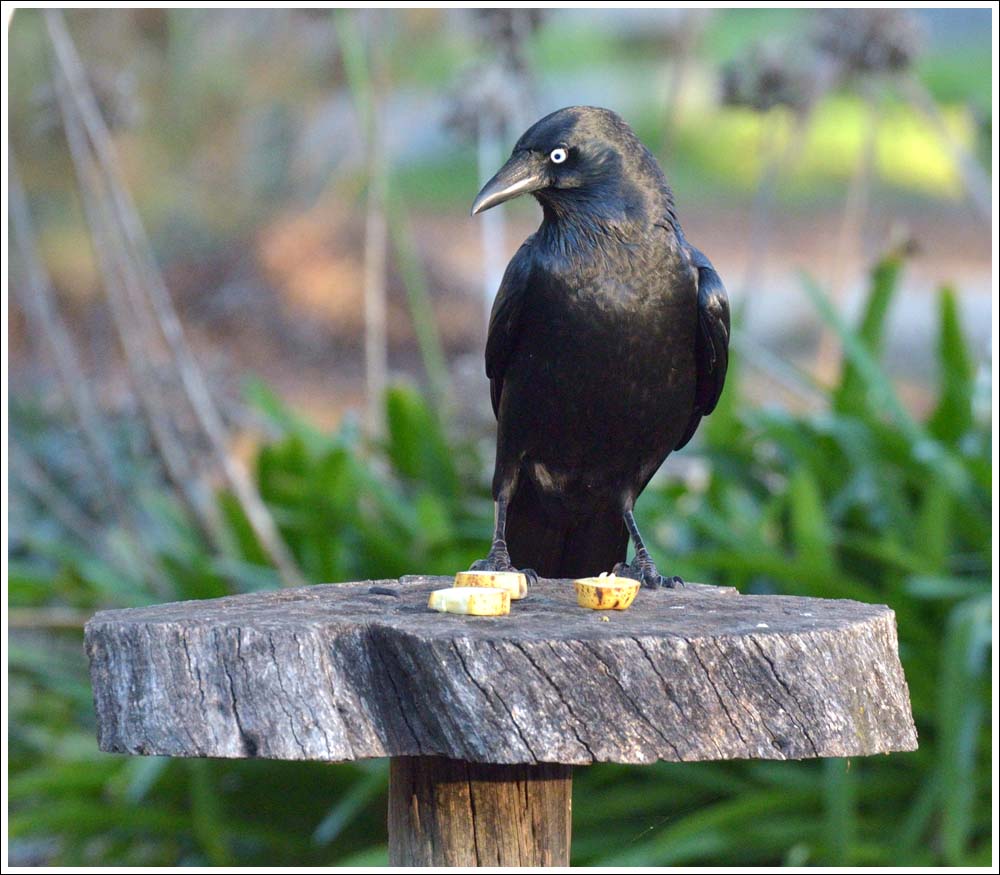
Then again, perhaps we’d better take one so he won’t be disappointed.
Click to enlarge.
Nearly Winter.

We’ve had a few light frosts already, and with the much cooler temperatures, subjects for the macro lens are getting harder to find. Occasionally something will be found on the sunny side of a tree trunk, or some other  location warmed by the late autumn sun. Following are shots gathered over the last couple of weeks.

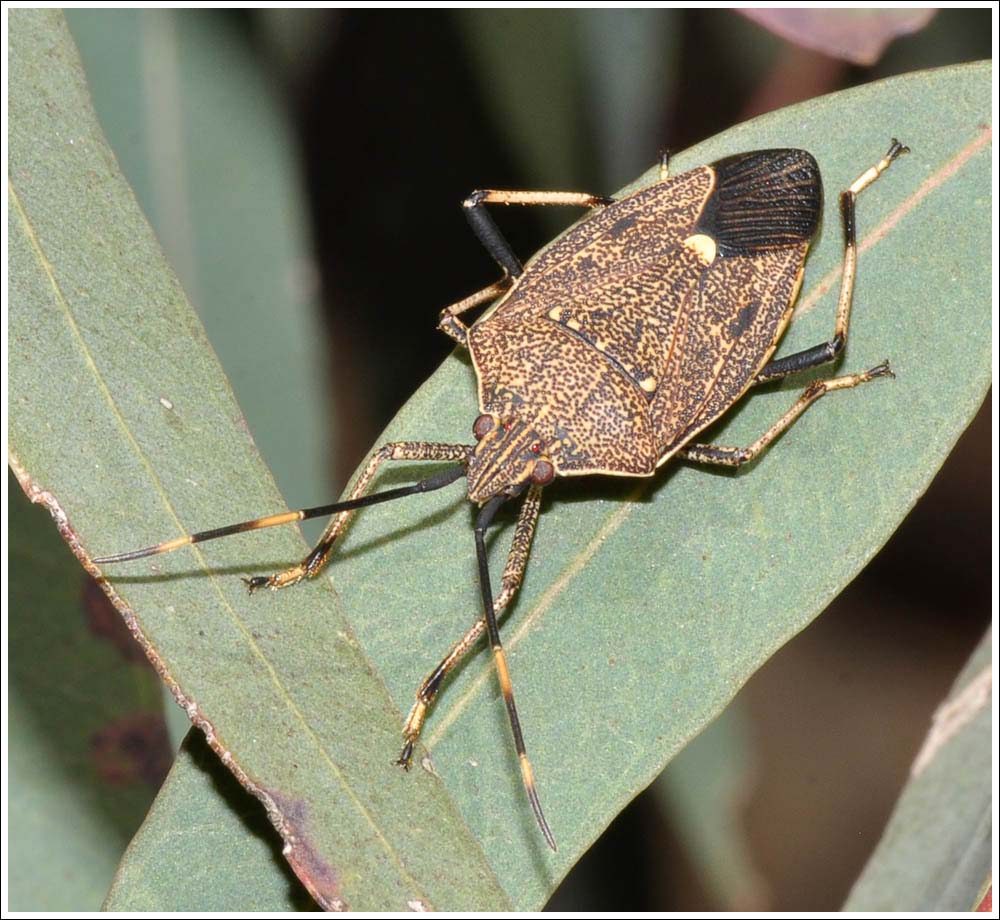
A Stink Bug, Poecilometis strigatus.

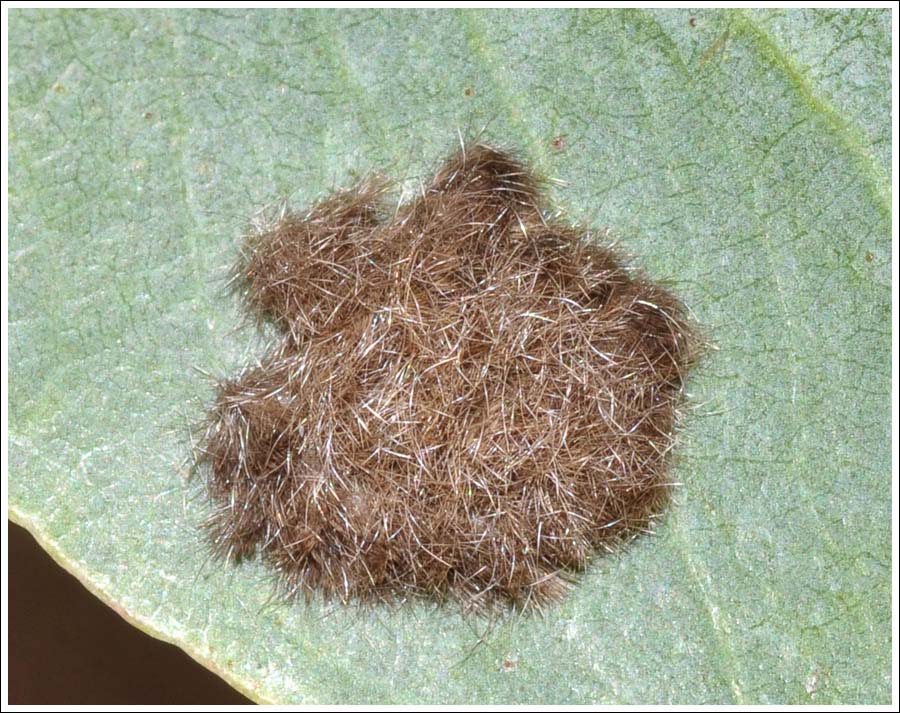
Sparshall’s moth larvae, Trichiocercus sparshalli have been common during the warmer months, and male and female adults have been coming to the moth light. This is a cluster of eggs, covered for protection by a mat of hairs from the female’s rear end.

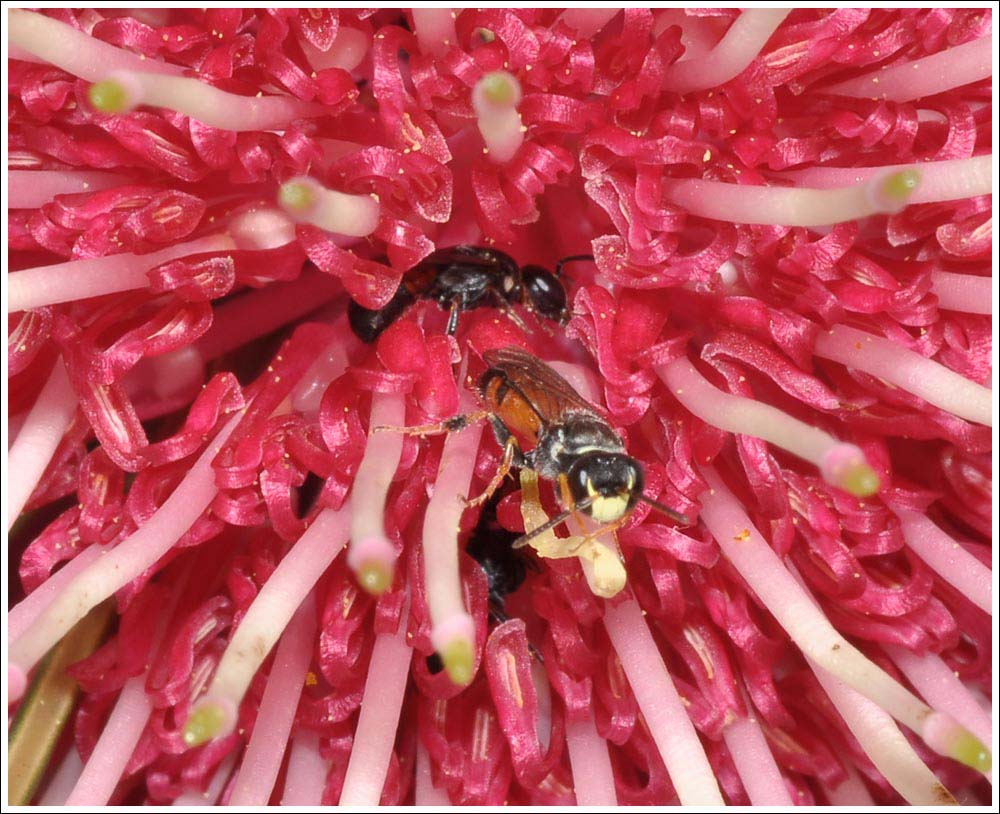
Autumn is Hakea flowering time, and as has been reported frequently in the past, the Hakea laurina is a magnet for bees, both honey, and the little native, Hylaeus littleri that has been in larger numbers than previously.

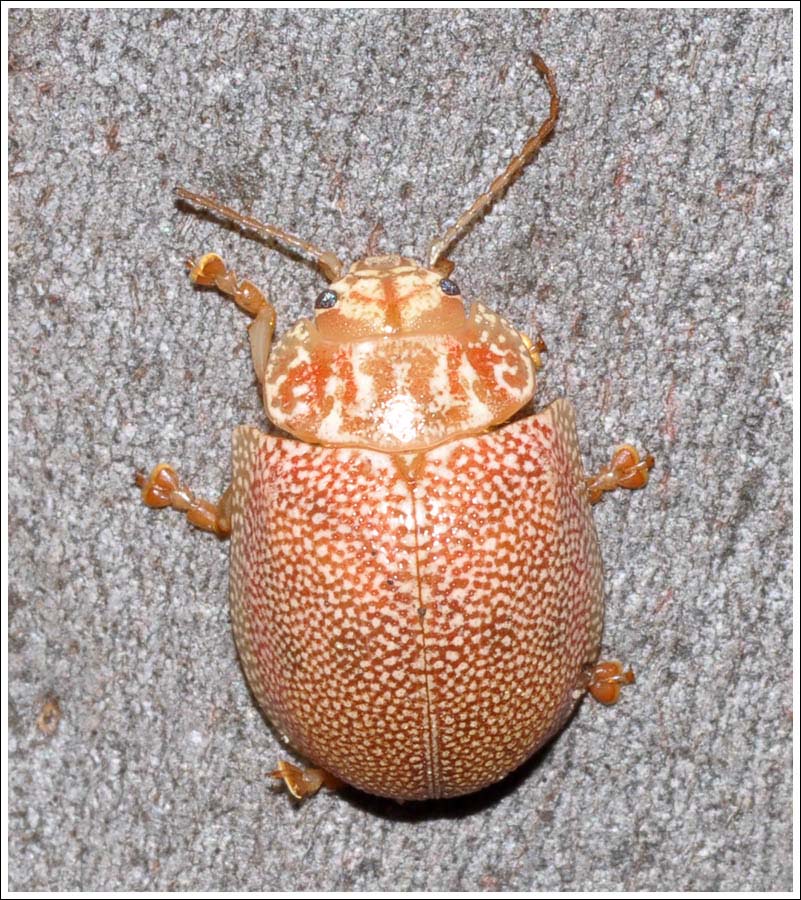
A leaf beetle, Paropsis atomaria.

A Lantern Fly in to the moth light, Rentinus dilatatus.

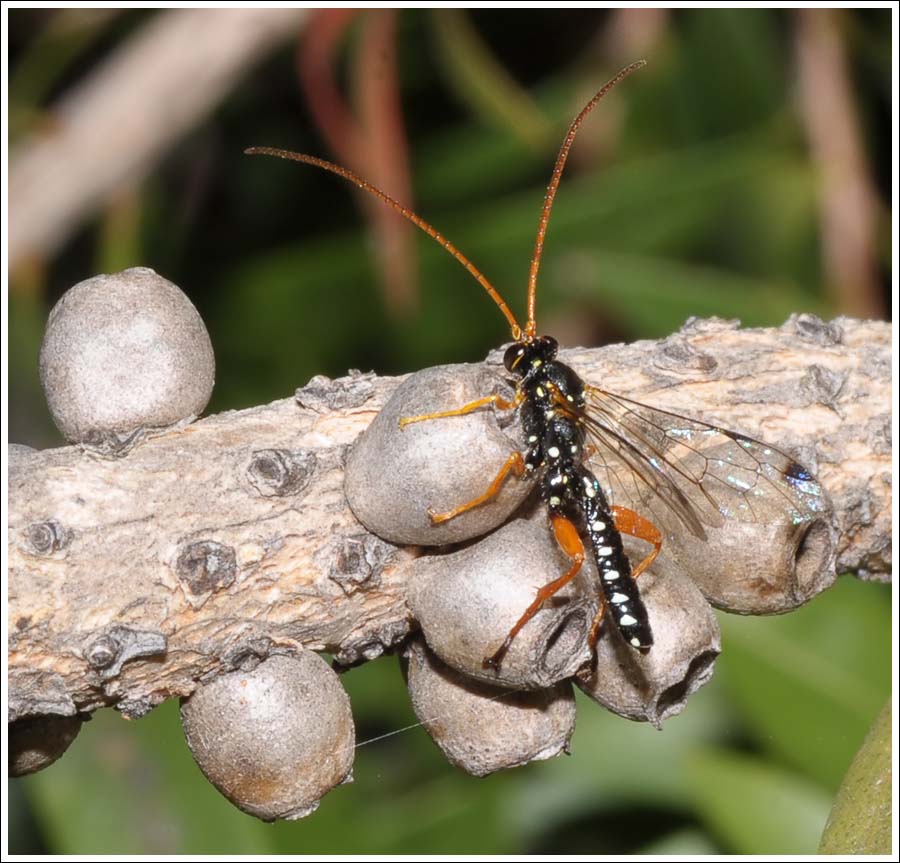
One of the callistemons has had a good autumn flowering, the bottlebrush flowers are attracting lots of honey bees, and keeping them company were two White-spotted Ichneumonid Wasps, Echthromorpha intricatoria busily flitting about. One finally landed giving a photo opportunity.

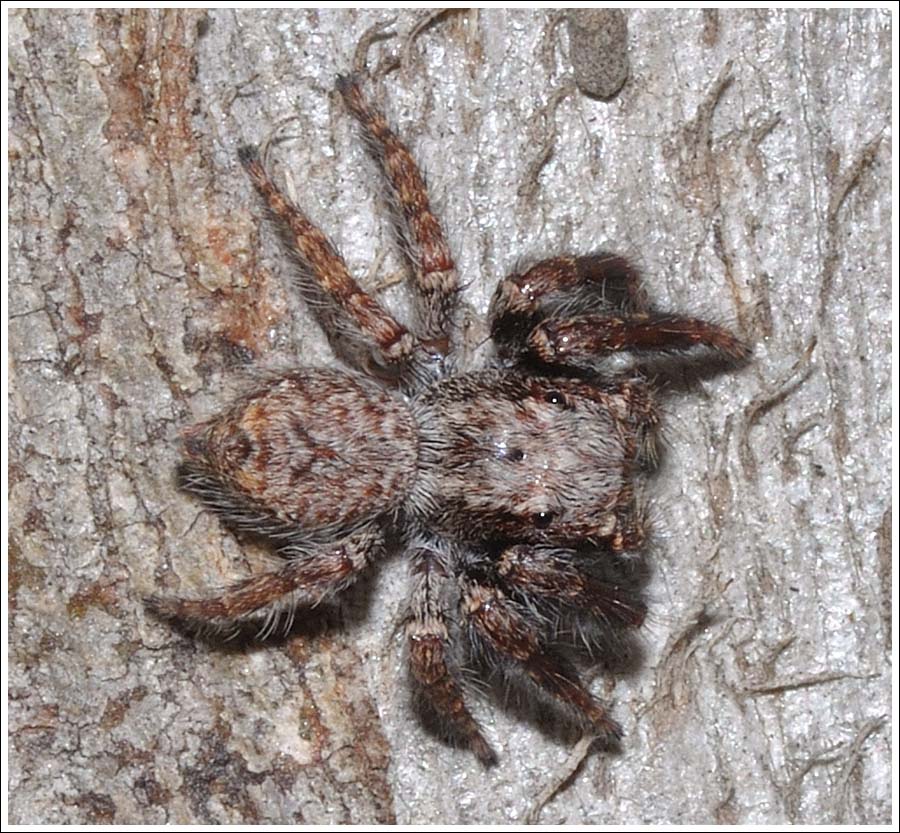
The Hoary Servaea, Servaea incana can still be found out and about occasionally.

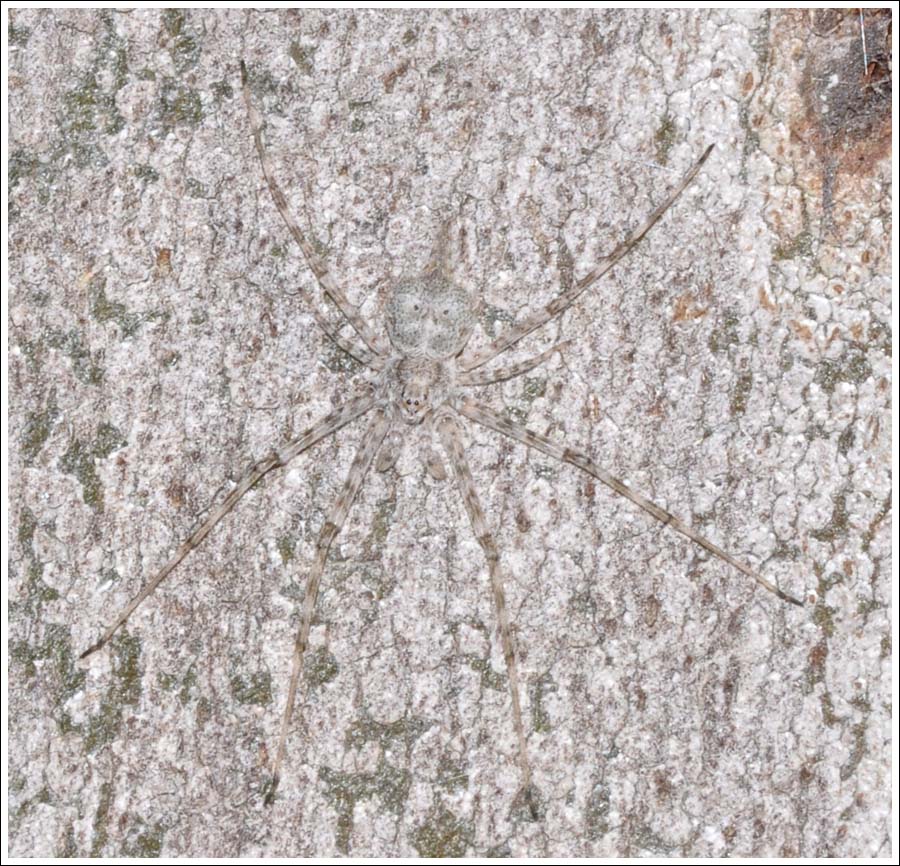
And on the Brittle Gum trunks, Two-tailed Spiders, Tamopsis species, still manage to amaze with their ability to blend in with the colour and texture of the bark.

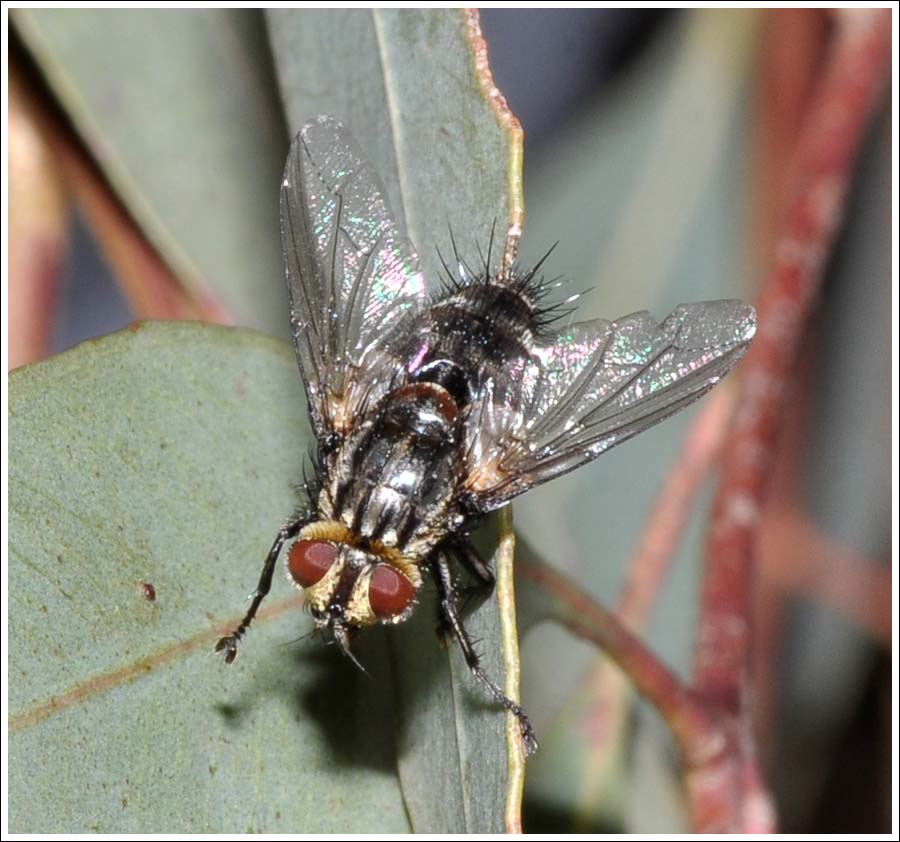
Finally a Tachinid Fly sunning itself on the Eucalyptus parramattensis.

Most images will enlarge.