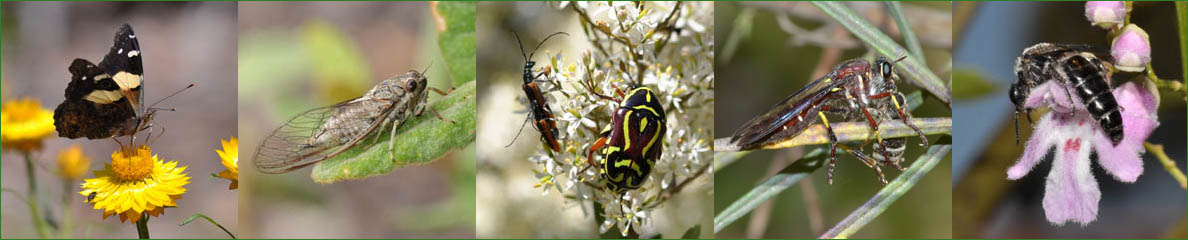
Springtime in the Box-Ironbark Bush #2.

Spring in the bush block has turned out to be very good for terrestrial orchids, and beard-orchids are showing in numbers at the moment. Two species are in flower, the Red Beard-orchid, Calochilus paludosus, and the Purple or Brown Beard-orchid, Calochilus platychilus. The latter was known as C. robertsonii but the Gippsland form is at the moment going under C. platychilus. More information is available in the excellent field guide Orchids of East Gippsland, published by the Bairnsdale and District Field Naturalists Club Inc. C. paludosus has two colour forms, red, and white, and both are very evident in the bush at the moment.

Calochilus paludosus, red form.

The white form.

Calochilus platychilus.

The Flying Ducks, Caleana major are also very numerous, and always good for a photo.

As the weather gradually warms, insect life is becoming more noticeable, and this Tau Emerald, Hemicordulia tau, one of the first species to appear, perched briefly beside a beard-orchid.

Click images to enlarge.
From the Garden #2.

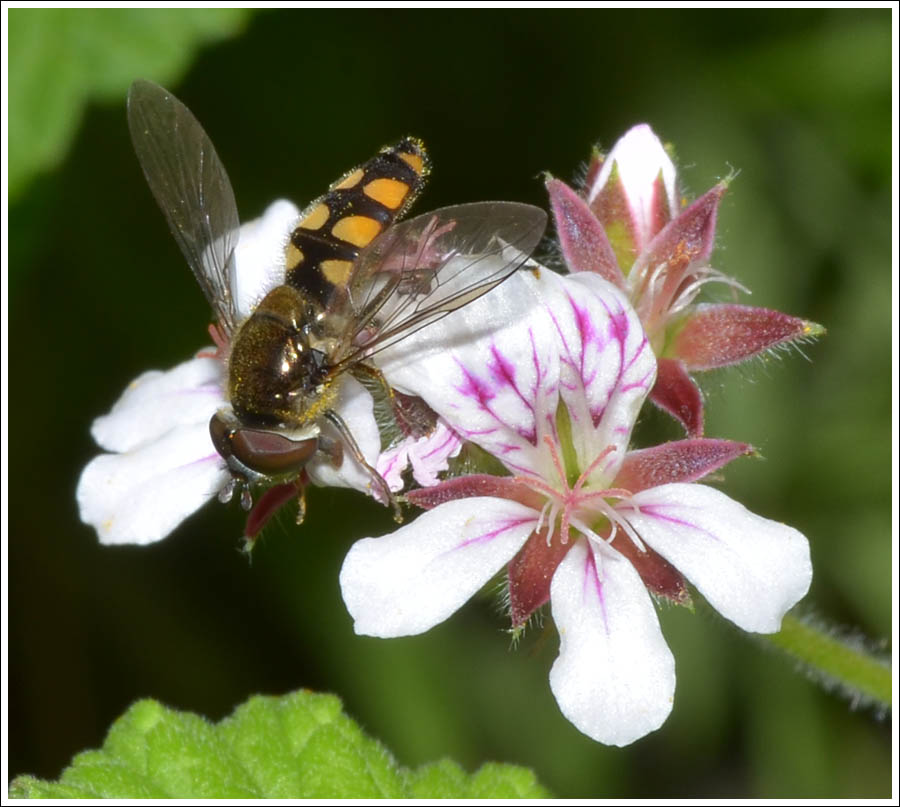
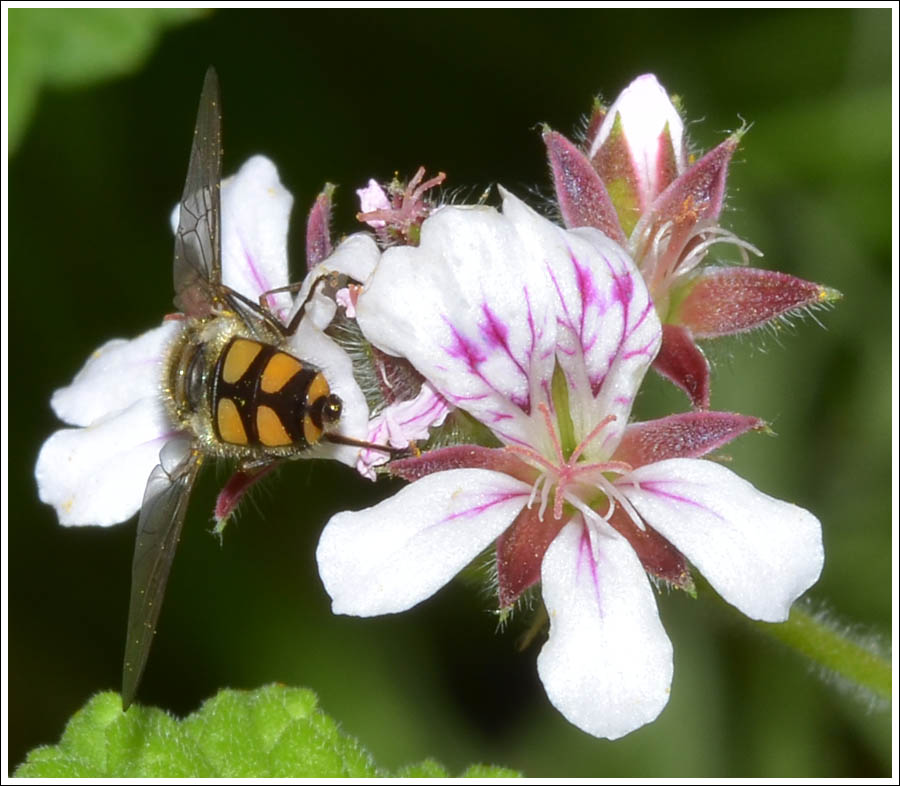
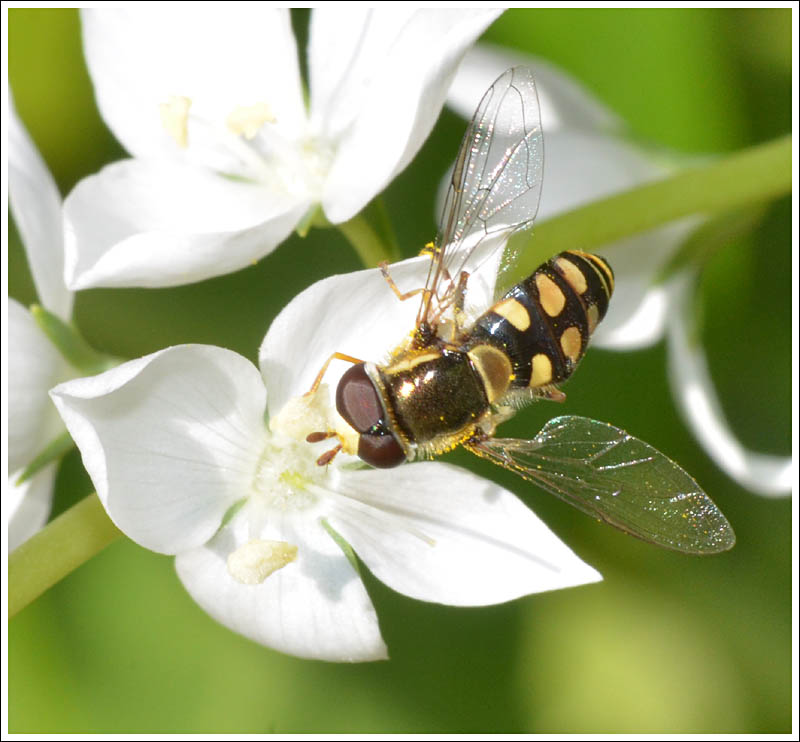
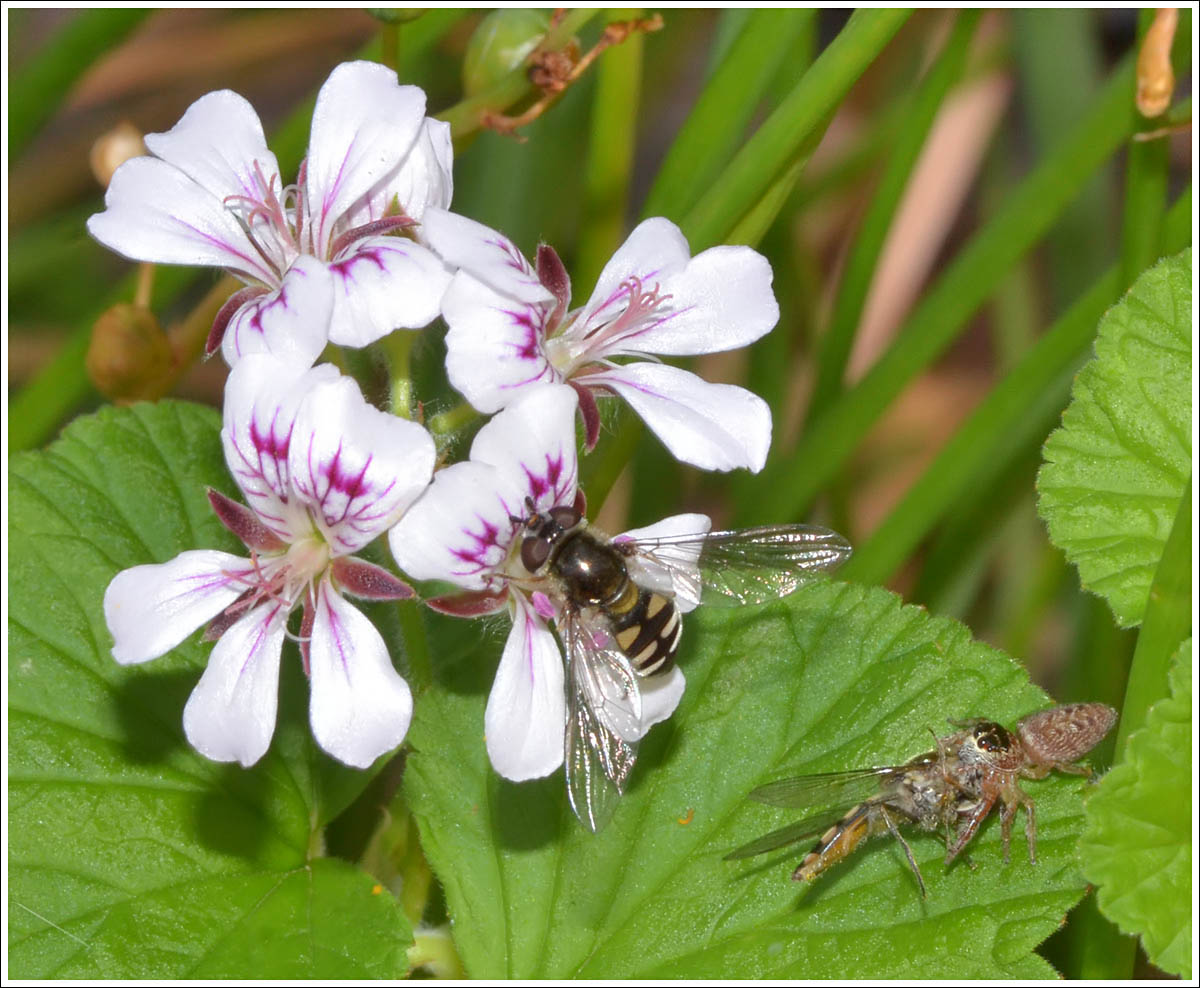
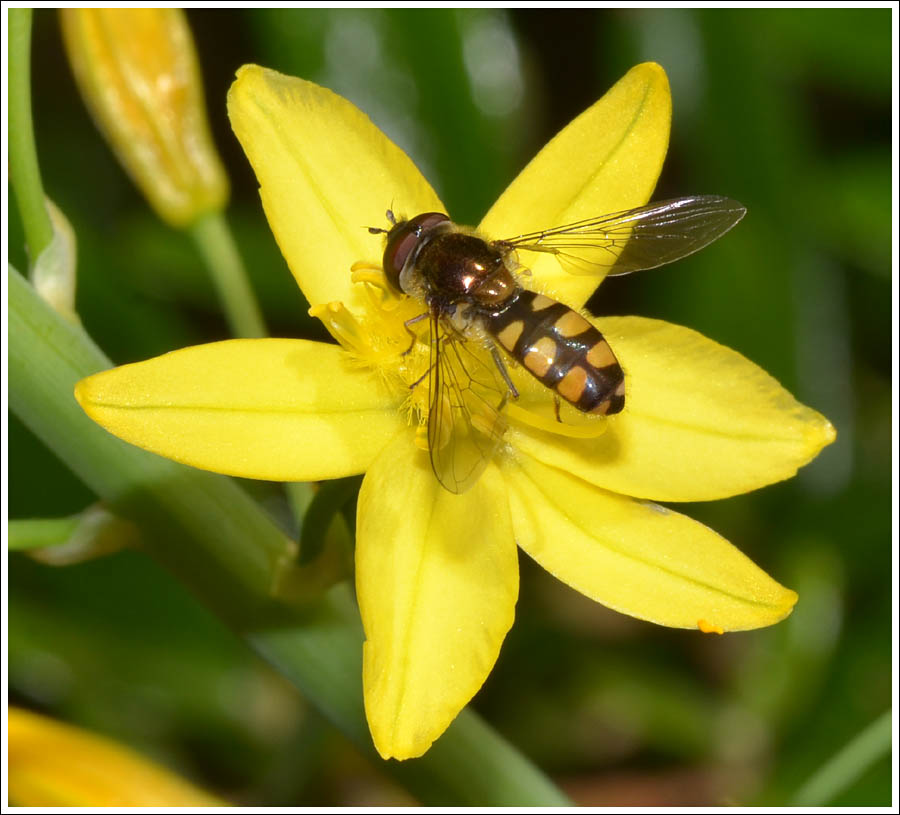
Much of Eastern Australia is experiencing the appearance of very large numbers of hoverflies, they are certainly in the garden in unprecedented numbers, as are Painted Lady butterflies. The abundance of hoverflies has been attributed to climatic conditions with unseasonal rain, and that has been the case locally with showery weather predominating week by week. Luckily they are a beneficial insect, the larvae of some species are aphid and scale insect predators, the adults feed on nectar and pollen. With many plants for native bees in flower, the hoverflies have a plentiful supply of pollen, and they are taking full advantage of it as depicted in the following images.

On Bulbine bulbosa.

On Pelargonium australe.

On Bill Cane’s white Veronica perfoliata.

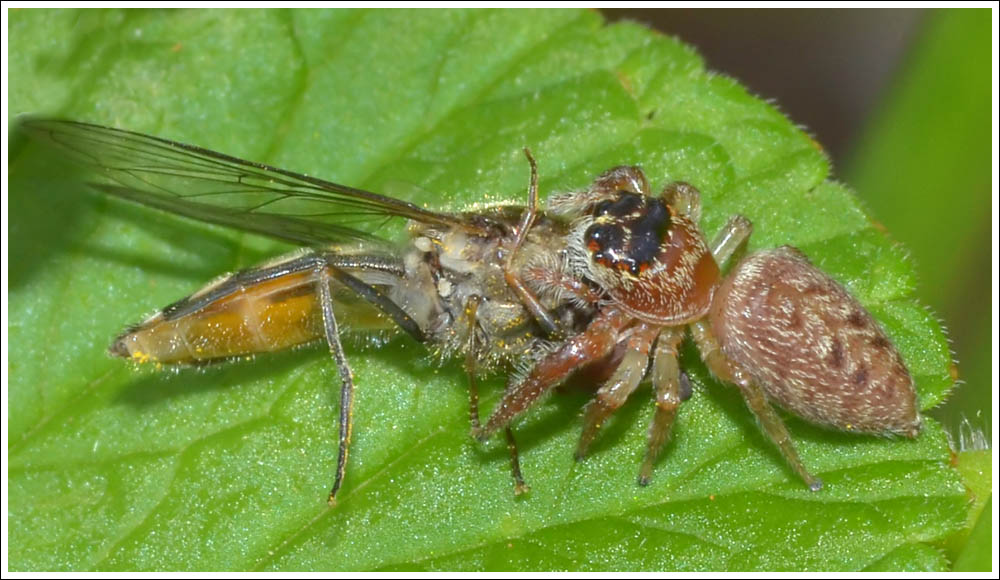
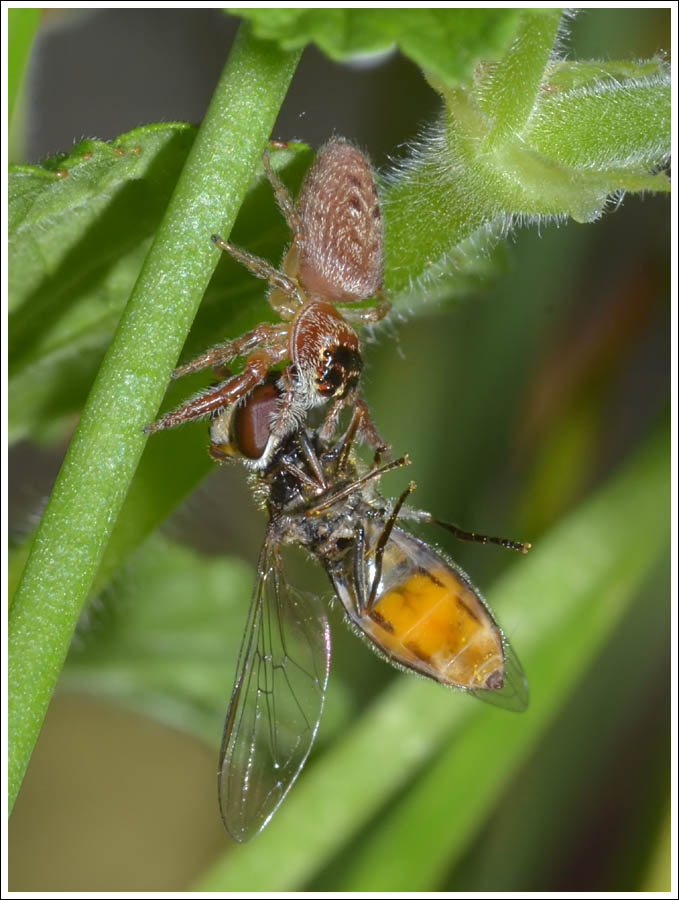
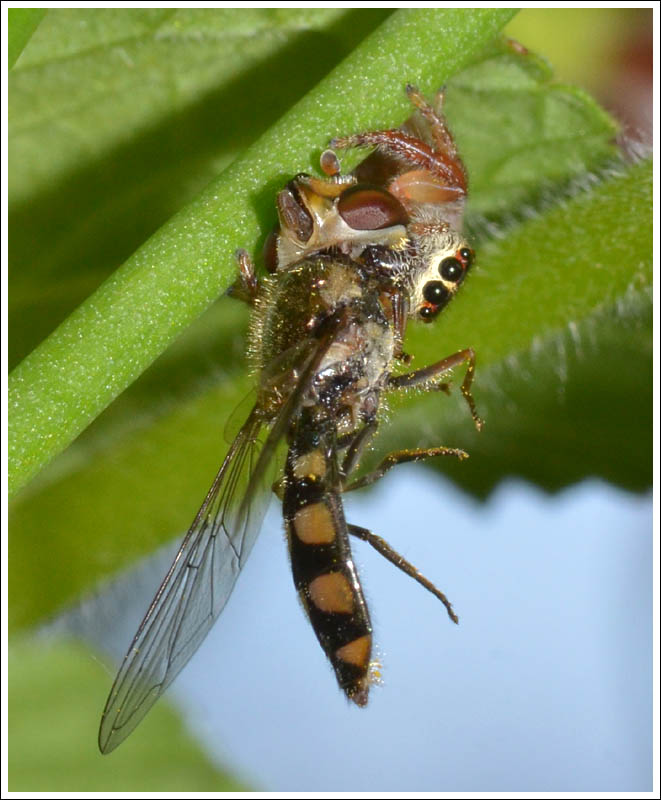
The beckoning flowers though hold hidden dangers for the hoverflies, in this case, lurking in the pelagonium, a jumping spider, Opisthoncus species.

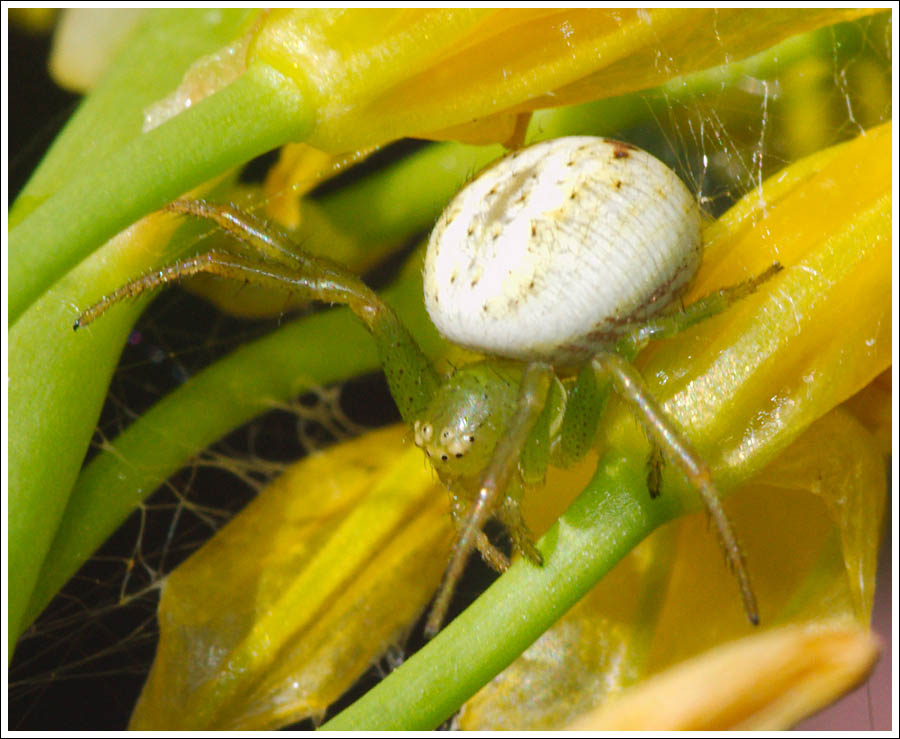
And with its minimal web in a bulbine, a tiny lynx spider, the remains of whose recent meal dropped to the ground while photographs were being taken.

Click images to enlarge.