The Native Garden Ecosystem #5

The Baeckea is still flowering and attracting large numbers of insects. While flies of many kinds are the most numerous, this species, Bibio imitator was very much out of the ordinary.

Wasps of several species are also nectaring, the yellow flower wasps shown in the previous post are still about although males only, the females have dropped off to lay their eggs. Bluebottles, Diamma bicolor are a common sight as they wander about in search of the mole crickets that they parasitise, but this was the first occasion the camera caught one feeding on nectar.
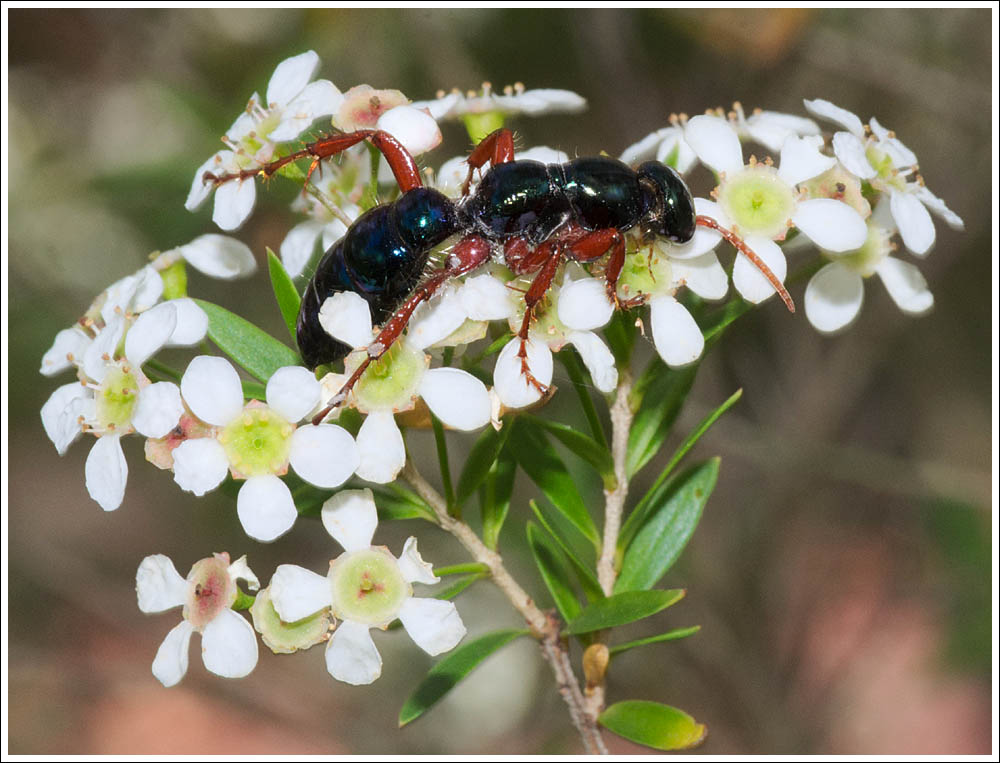
Lissopimpla excelsa is commonly known as the orchid dupe wasp, it is the pollinator for all five species of Cryptostylis orchids, (Wikipedia.)

Another of the many flower wasps.

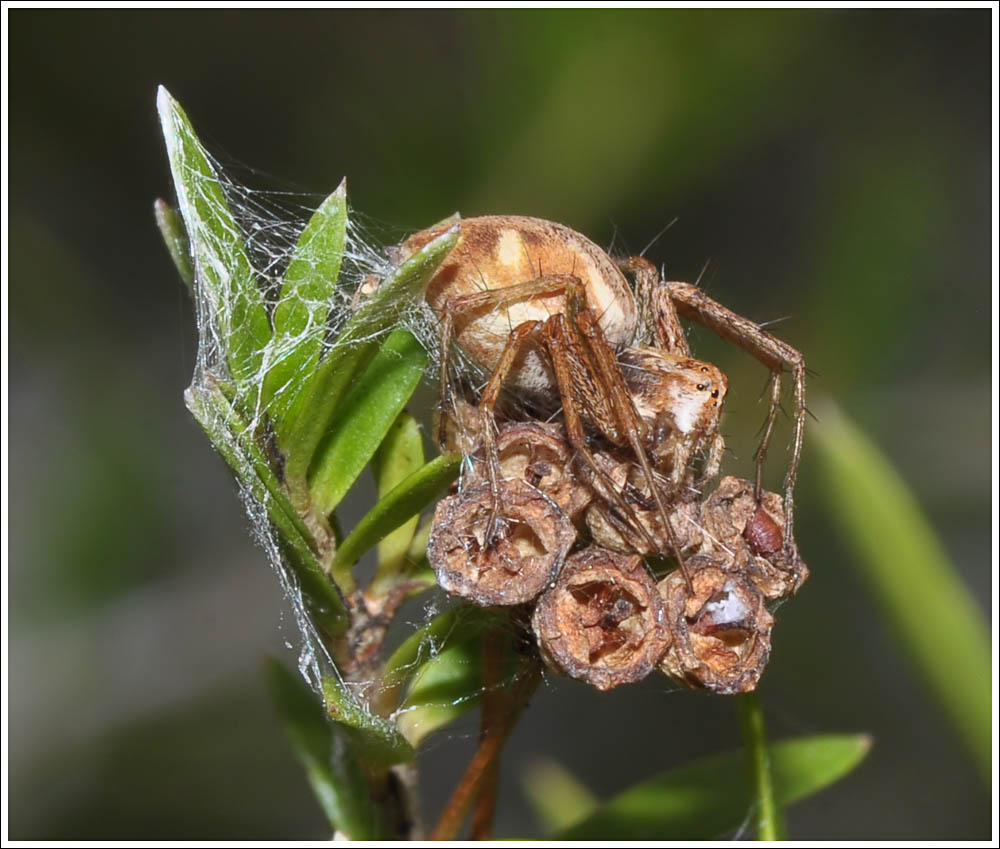
All those flies make the Baeckea a happy hunting ground for this small lynx spider.
Click to enlarge.


The Bounteous Baeckea.

When the Baeckea virgata (Sannantha pluriflora) flowers at Christmas time it is a magnet for insects seeking nectar. Before the big frost the flowers of our Leptospermum petersonii used to attract the yellow flower wasps, it is now sadly gone, but the baeckea has filled the breach. Females are wingless, but when coupled the males take them around the flowers to feed. When ready to lay the females drop to the ground, where they burrow in to attach their eggs to soil dwelling insects. Here are images of male wasps, some showing the female tucked under the male’s abdomen. Click all images to enlarge.

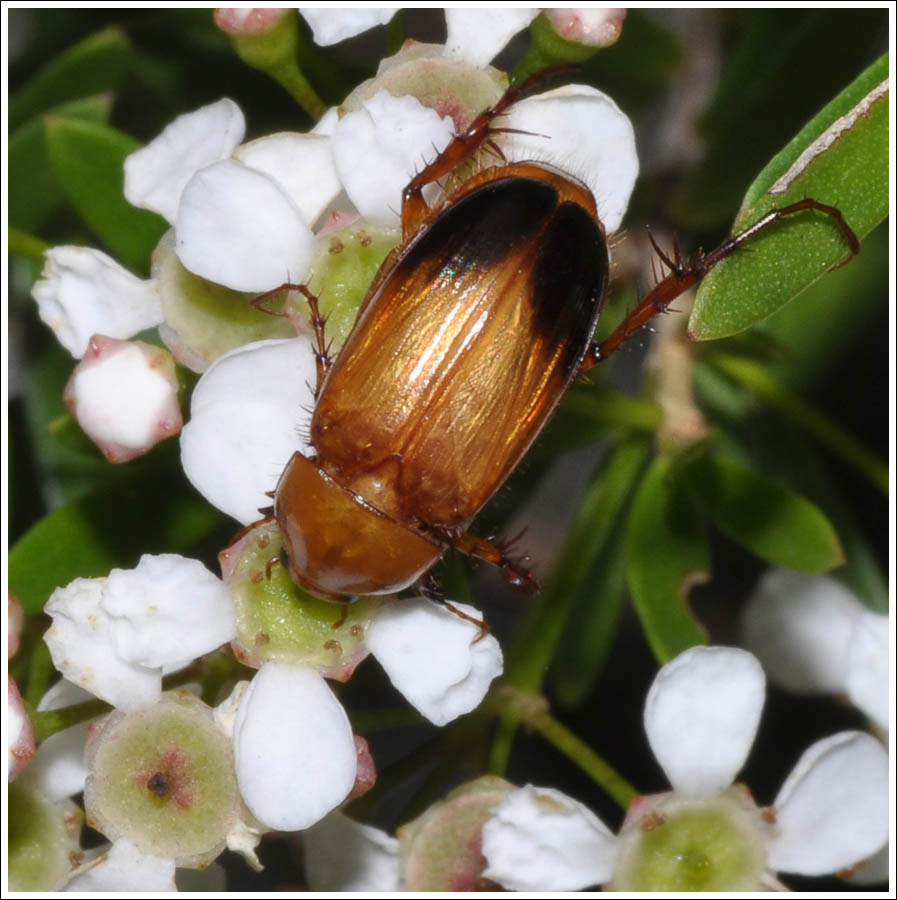
Small long-legged scarab beetles also feed greedily on the nectar.

Gasteruptiid wasps parasitise solitary bee nests. A pair was feeding on the baeckea flowers, the female with the long ovipositor eluded the camera but the male paused and was snapped.

The foliage too provides sustenance for those who prefer it, eg. case moth larvae.

Many species of fly and other insects visit the flowers, subjects for another time.