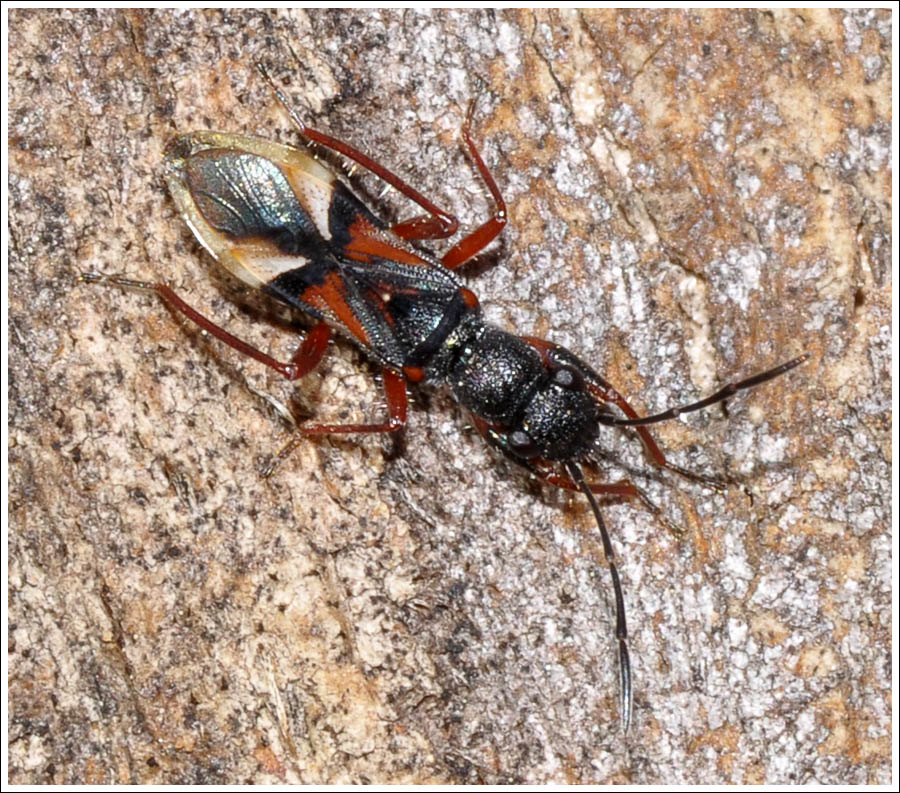
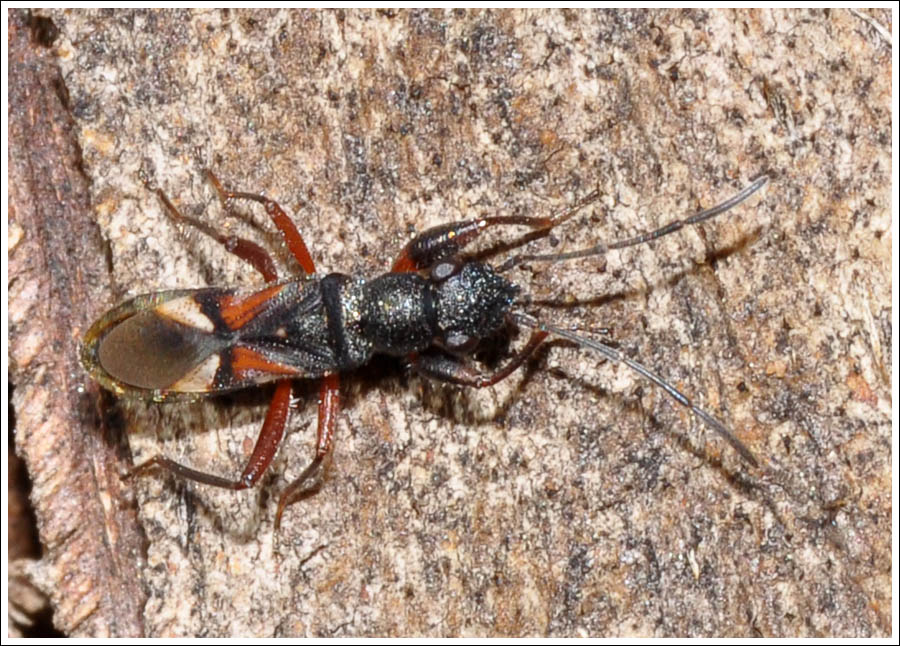
Milder temperatures are seeing an increase in invertebrate activity with more opportunities for photos, and the fascinating thing with these creatures is that there is always something different to see. While checking the trunk of the big Yellow Gum, E. leucoxylon, two small insects that looked a little like ants were observed and photographed. With the images on the monitor it was apparent that they were not ants, and a search on the internet revealed them to be ant mimicking seed bugs. A bit more searching brought up the excellent site of the Ellura Sanctuary in the South Australian Murray Mallee, with a corresponding photo and an identification from Brett, Daerlac cephalotes. Note the four segmented antennae.
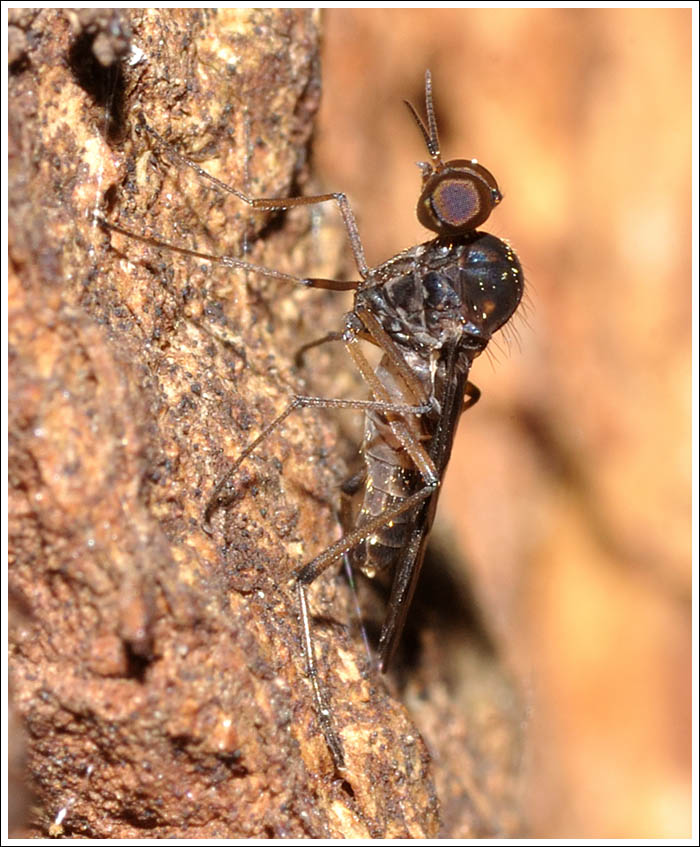
On the Red Gum trunks there were quite a few of these very dark mosquito size insects, wood gnats, family Anisopodidae, Sylvicola dubius..
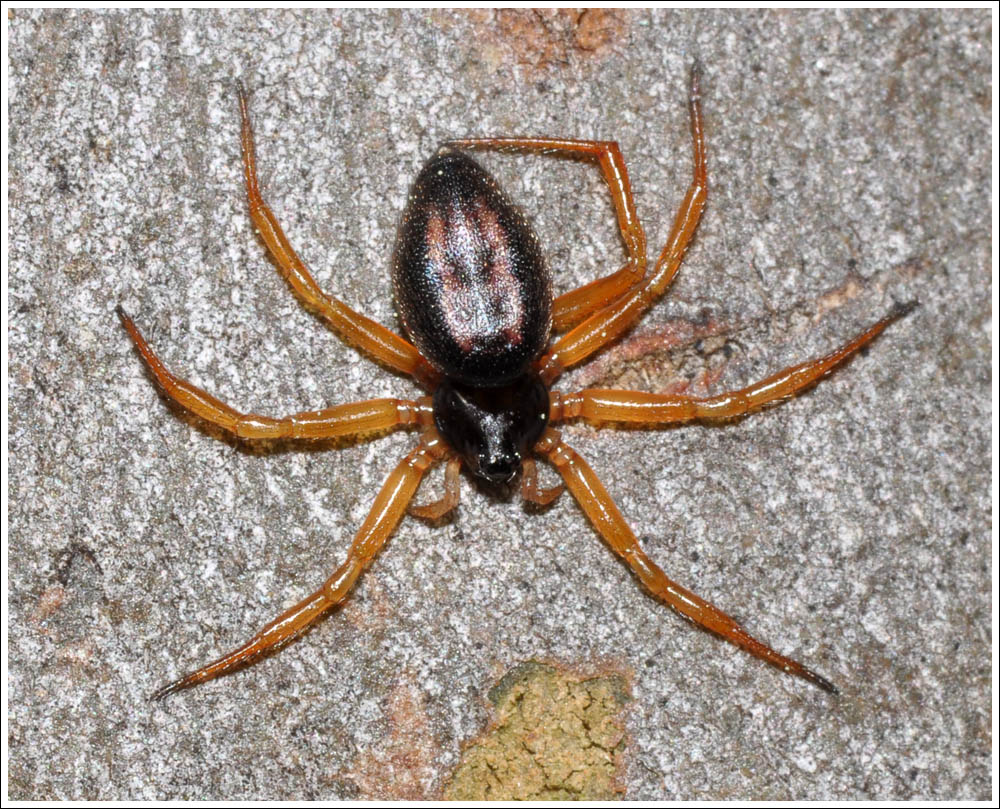
Spiders are coming into view too, this ant eating Euryopis umbilicata came out from behind a flake of bark to warm itself in the winter sun.
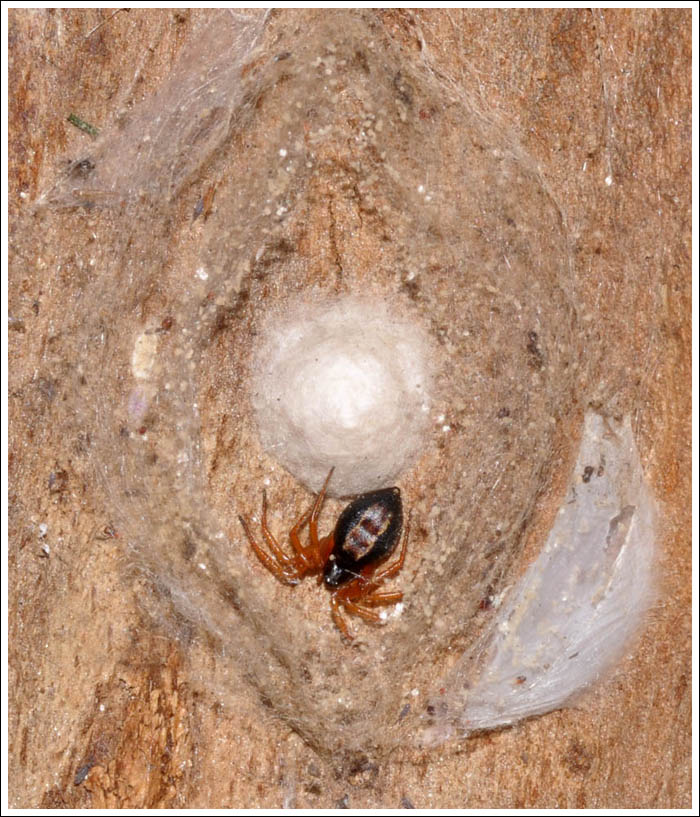
Investigation under another flake produced a female with her egg sac.
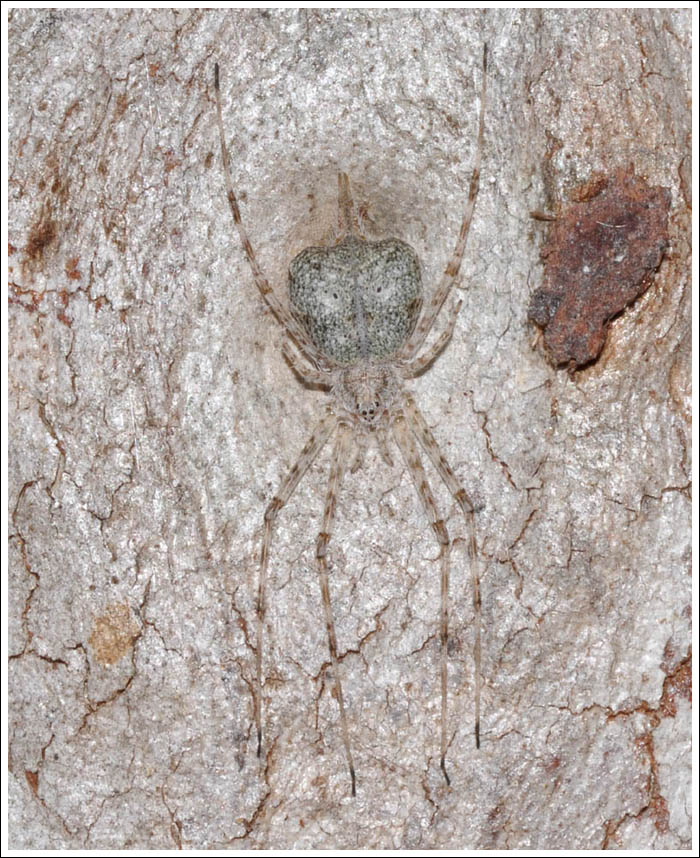
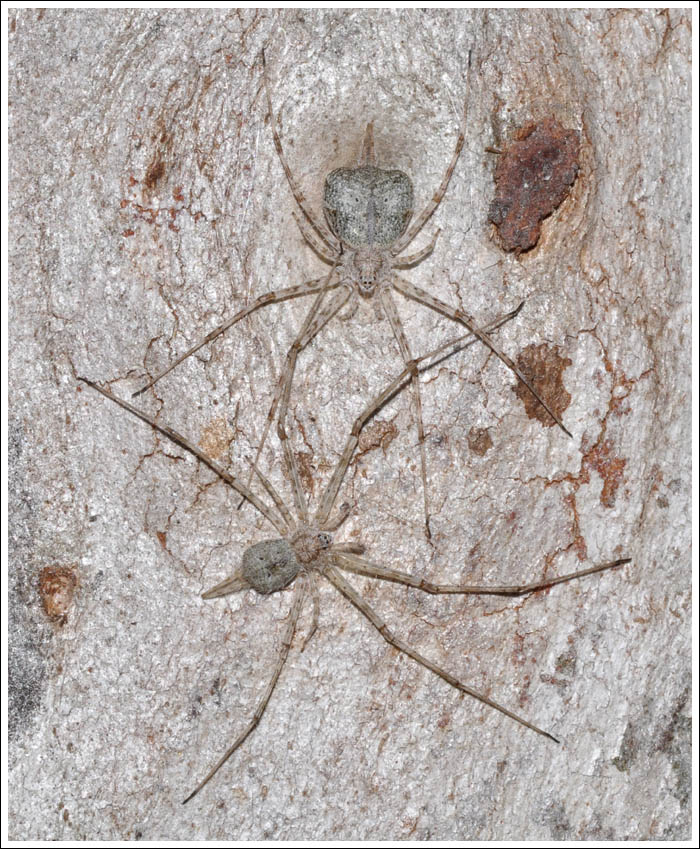
There are four Brittle Gums, E. mannifera in the garden, and they are the favourite spots for Two-tailed Spiders, Tamopsis species. They have often featured here but are always good for more photos.
Female with her body in a dimple as they are commonly seen.
Another female with prey.
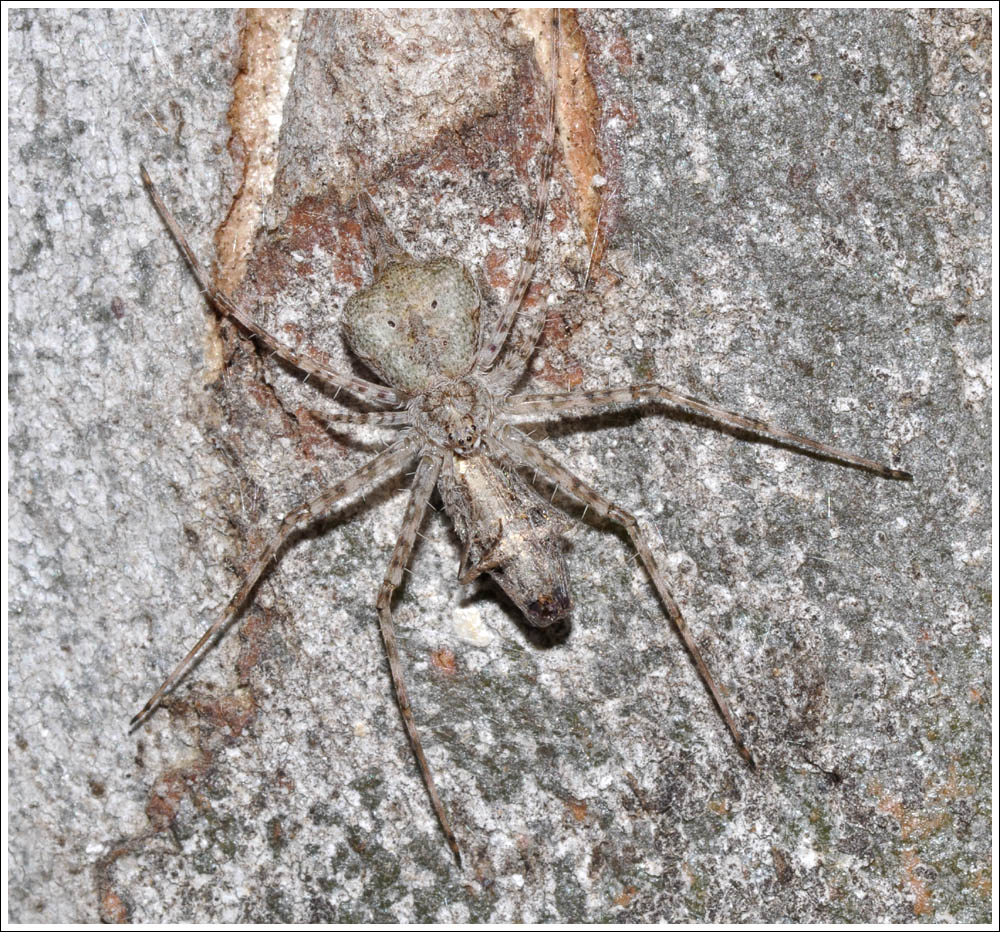
A male with legs raised close to a female, this made it more visible in the sunlight.
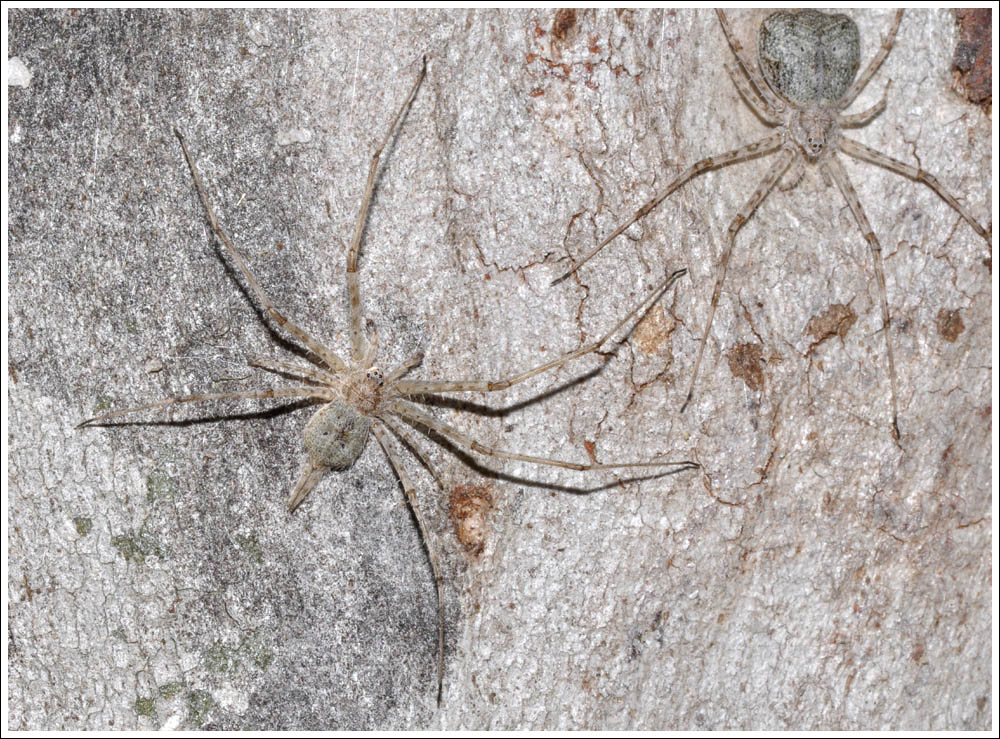
A tap on the trunk made it instantaneously flatten its legs and become more camouflaged.
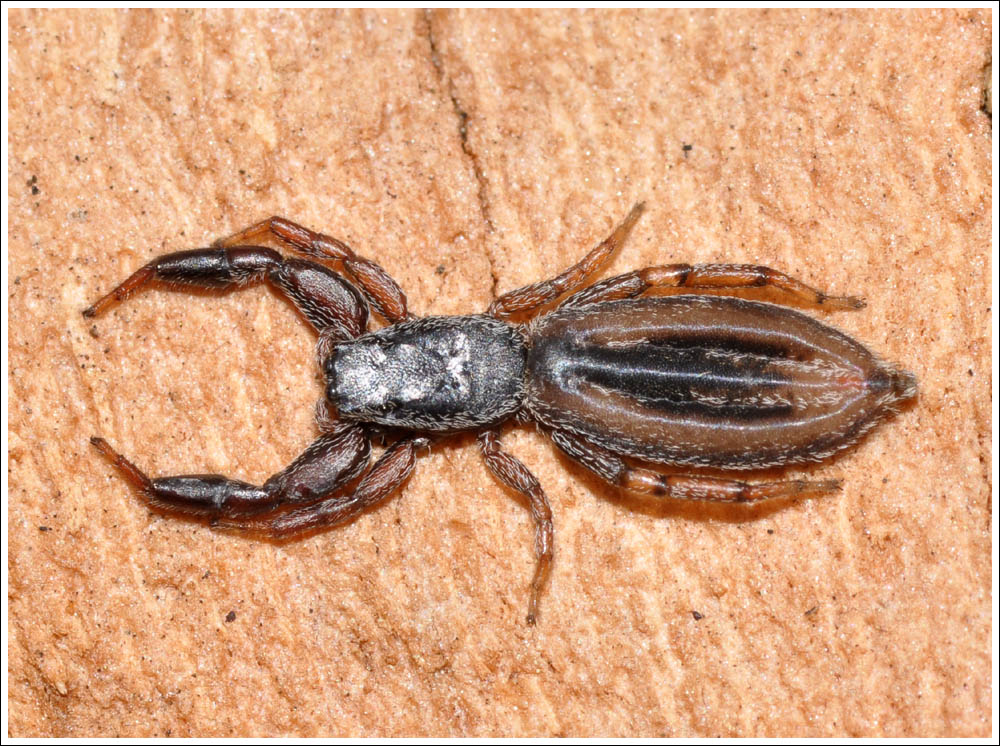
A Grooved Jumping Spider, Holoplatys planissima was found under bark on the Yellow Gum.
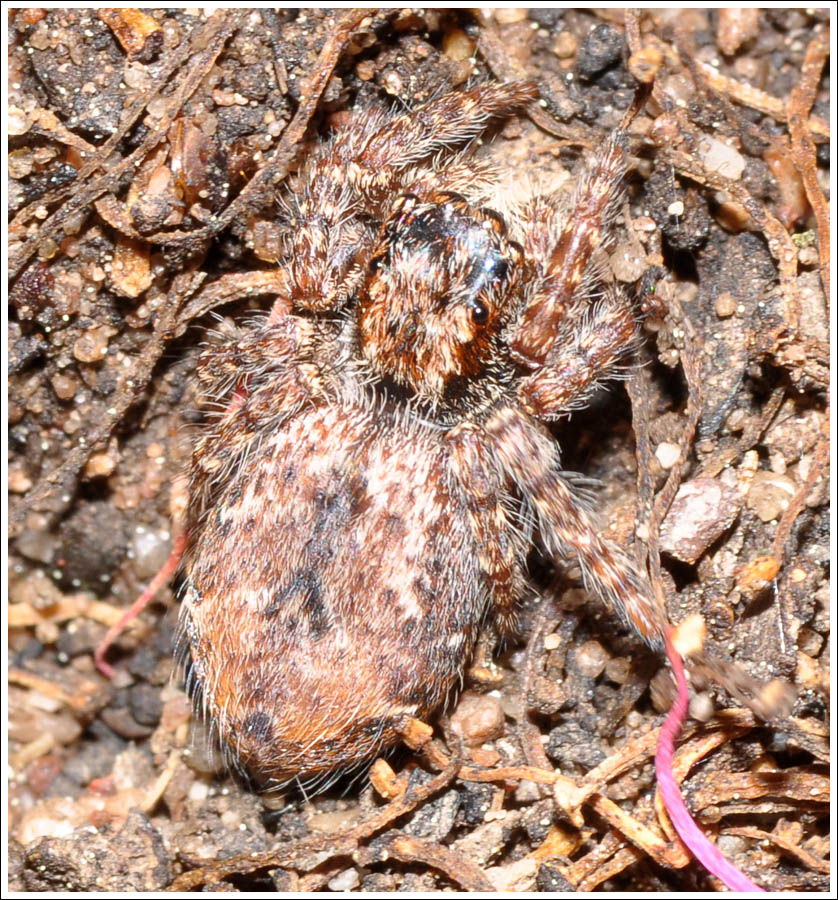
As was an unusual Servaea incana that dropped to the ground and virtually disappeared.
Some images will enlarge.


