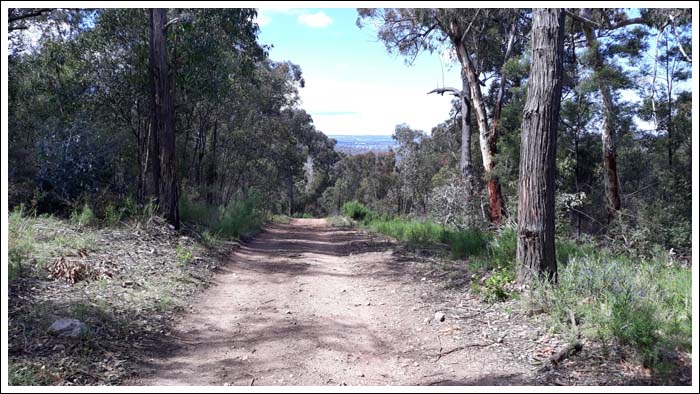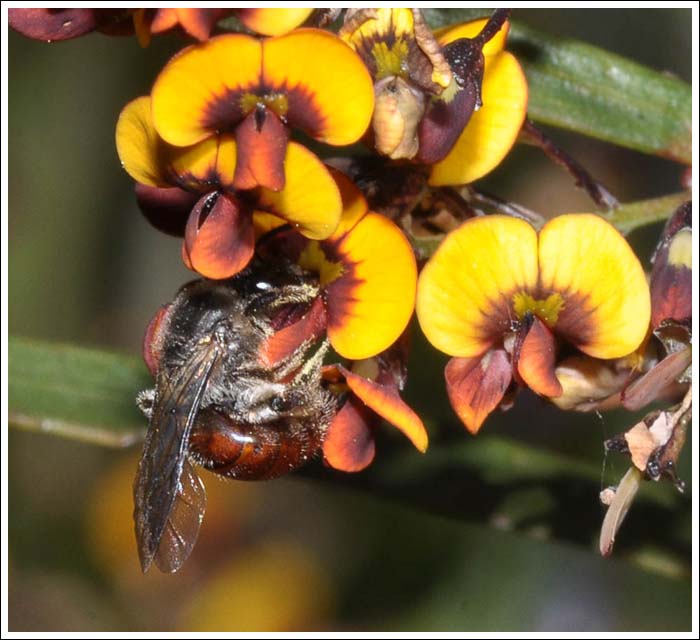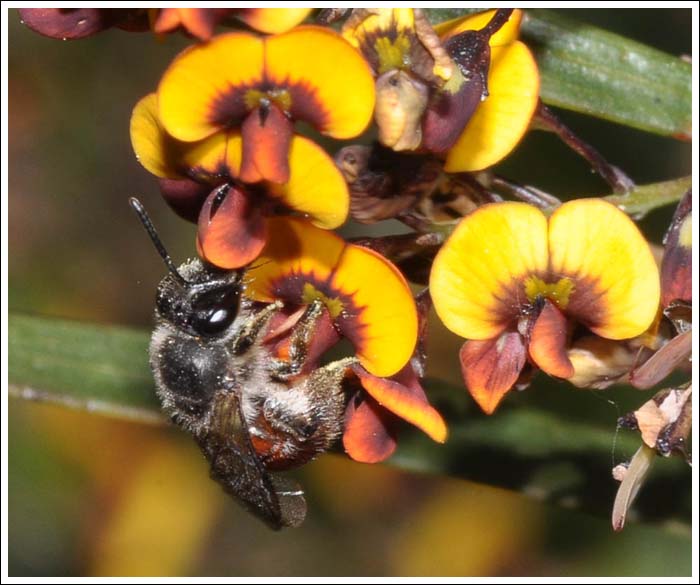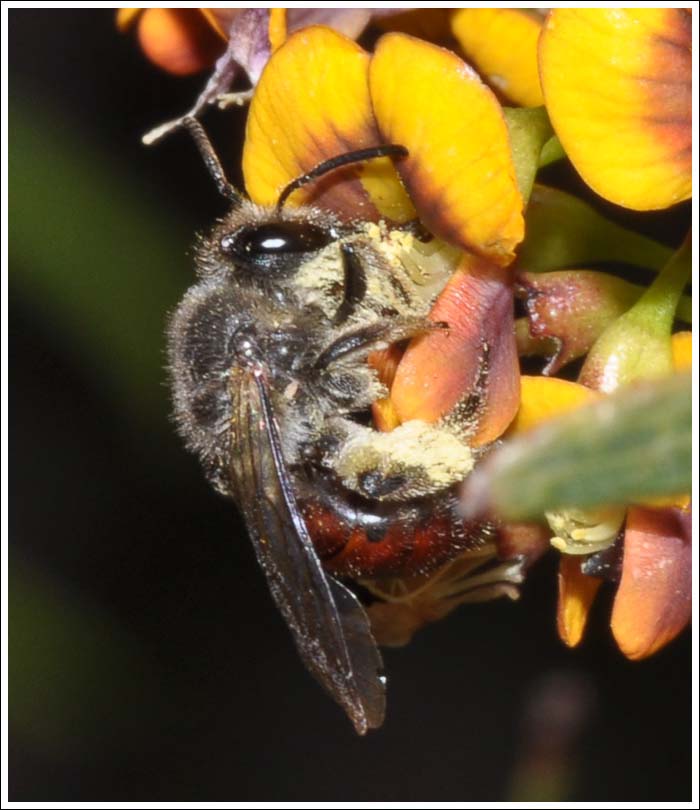
Another walk in the bush block looking for new plants to add to the vegetation list. Three were found, the Pale Grass Lily, Caesia parviflora, Scaly Buttons, Leptorhynchus squamatus, and Fringe Lily, Thysanotus tuberosus, the latter flower too old for a good photo.
Pale Grass Lily.

Scaly Buttons.

The highlight though was the huge number of Hornet or Tiger Orchids, Diuris sulphurea flowering throughout the bush after good rainfall. Seventeen flower spikes were counted in one group spread over about three metres, and they were even seen rising up from quite dense tussocks, in all, a sight never before seen by this observer.

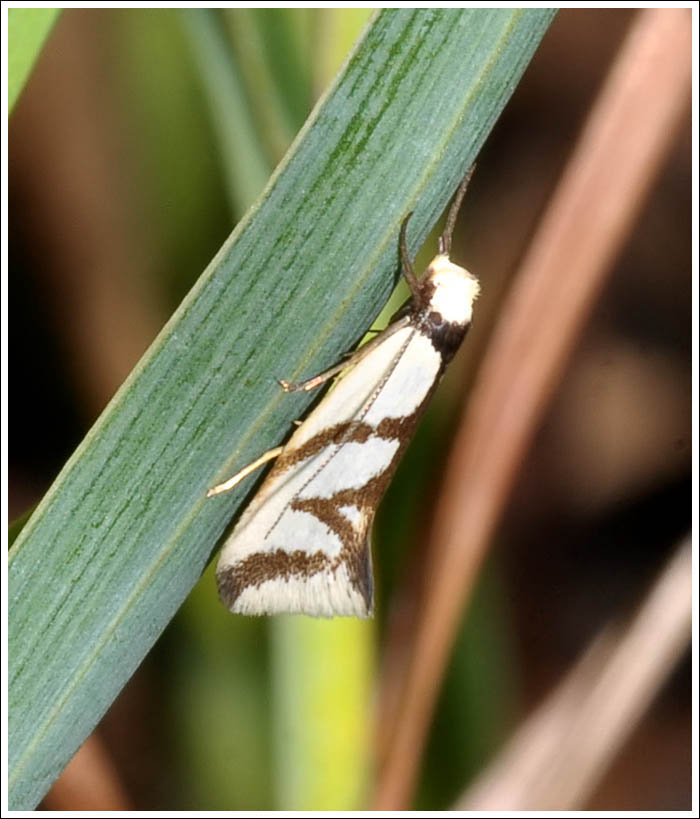
Invertebrates kept the camera busy during the wander, what was thought to be a brown butterfly was a bit elusive but finally settled, and was revealed to be a moth, a female Long-nosed Epidesmia, Epidesmia hypenaria. The colour of this individual was quite unlike previous records made in the general area.

This species of Darkling Beetle, Lepispilus sulcicollis was seen in several spots.


A sharp lookout was kept for Peacock Jumping Spiders, with no result, however other species of jumper were seen including Jotus auripes.

This Sawfly larva was found clinging to a grass stem close to the ground, by its appearance it was probably preparing to pupate in the leaf litter.

And while unsuccessfully attempting to snap a Red and Black Spider, this Gumleaf Grasshopper, confident in its superb camouflage, ignored the nearby activity and then posed for the camera, click for a larger view.