At The Bee Hotel #2.

Strangely, in a season when a lot of the usual wasps seen in the garden have been largely absent, a species not previously observed has appeared, namely a species in the genus Pison. Several are working busily, nesting in the bamboos and red gum block.

Sealing the entrance.

Job done.

Another individual at its nest hole.

Next afternoon, sealing up.

And back to the first wasp, second nest on the go beside the first.

Stocking the larder with a spider, first of two seen going in..

While the wasps and bees are mostly observed going in head first, occasionally they will reverse in, the reason probably being to lay an egg.

Food For All.

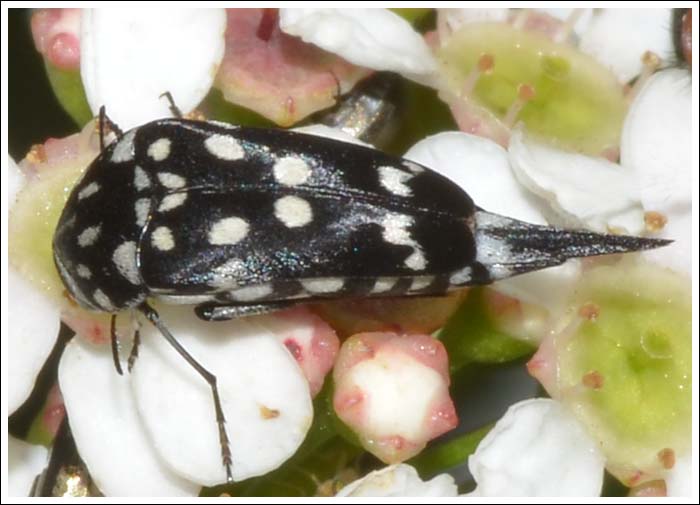
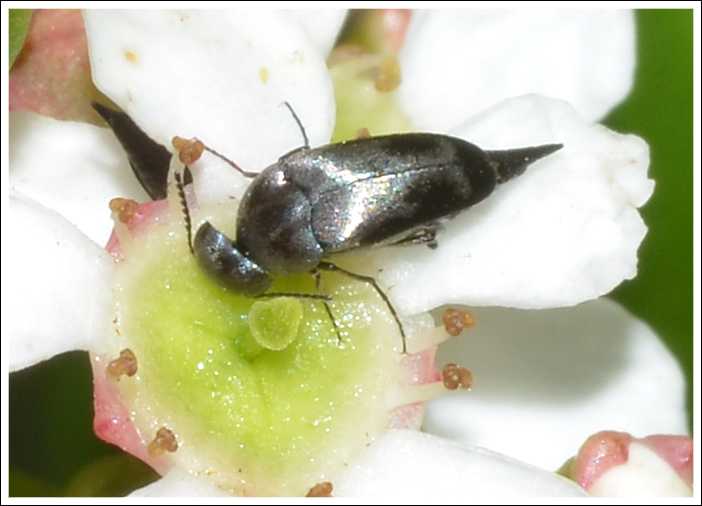
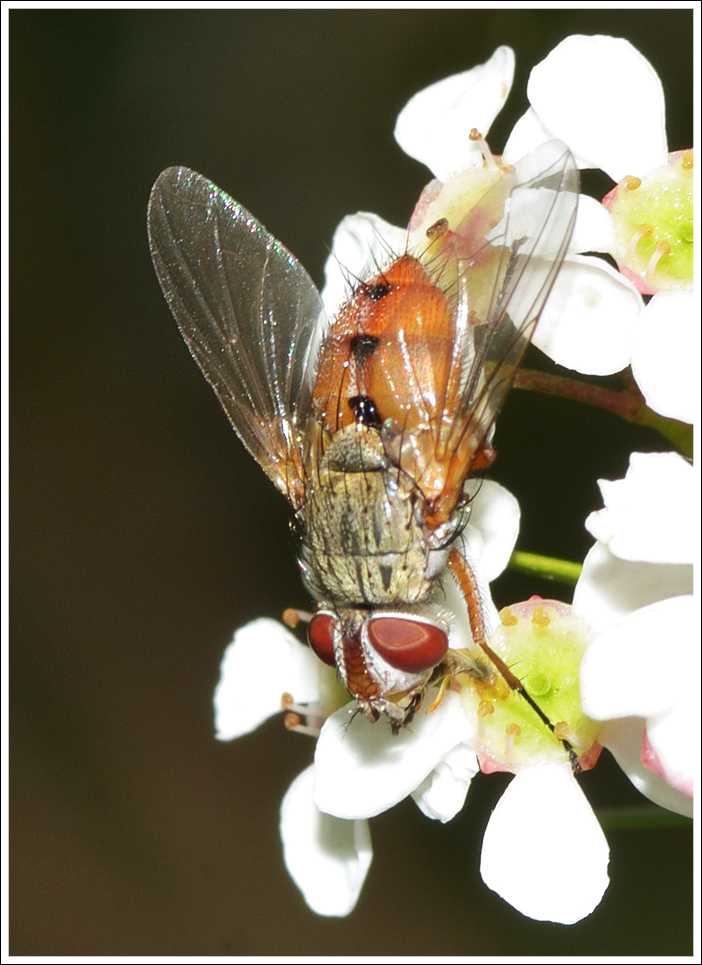
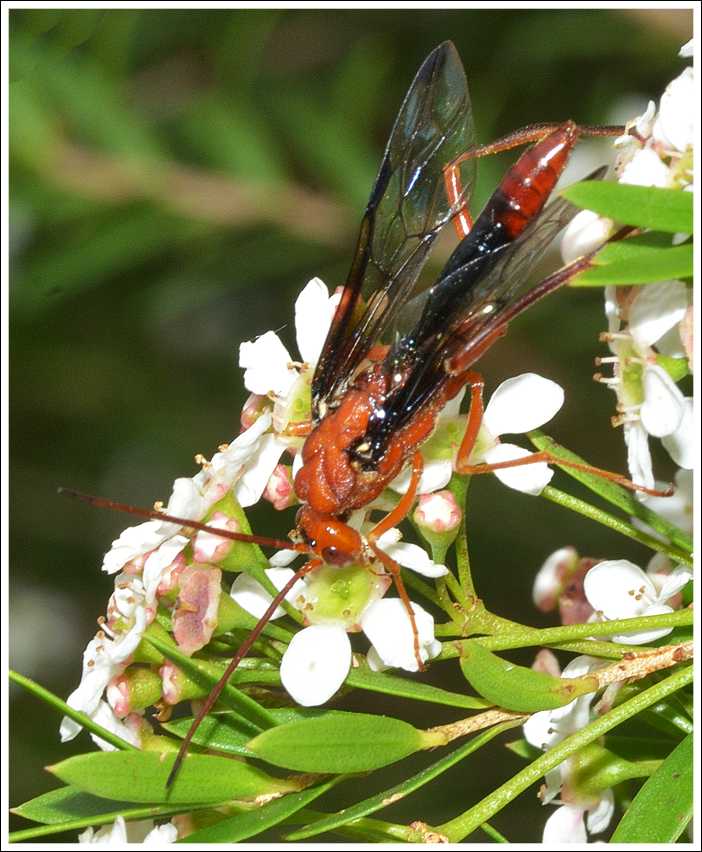
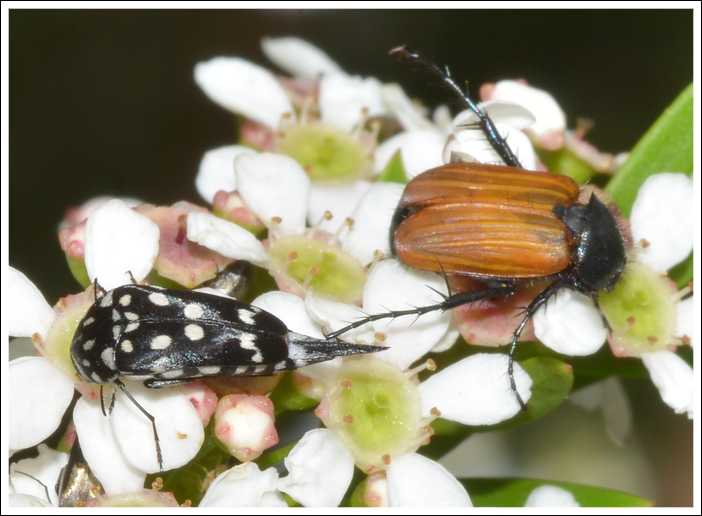
Sannantha pluriflora, previously known as Baeckea virgata, is an East GippslandĀ  shrub in the Myrtaceae that makes a good garden subject. It flowers mainly in the summer and the profuse small white flowers are a great food source for a range of insects. The shrub in these photos is forty odd years old, has been cut back to the lignotuber several times, and is in full flower at the moment with washing and pintail beetles, wasps, and flies tucking in. Washing beetles, Phyllotocus rufipennis, are attracted to anything white, and get the common name from their habit of settling on washing on the clothes line. They have been in large numbers on the Angophora costata flowers, and now those are finished they are on the Sannantha.

Pintail Beetle, Hoshihananomia multiguttata.

Flies of many kinds are on the flowers, including a number of drones.

A variety of wasps are feeding, the native bee parasite, Genus Gasteruption.

Female.

Yellow Sand Wasp, Bembix species.

And a new record, a wasp in the family Leucospidae.