Close Ups.

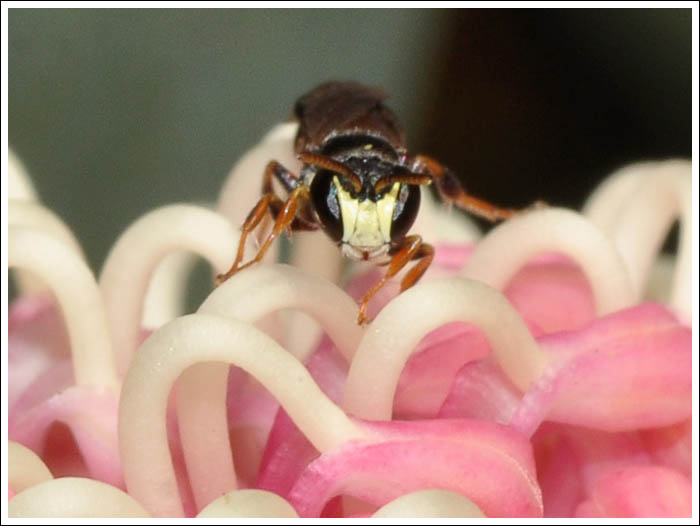
With May here the Hakea laurina buds are starting to burst, and as was the case just twelve months ago, the native bee Hylaeus (Prosopisteron) littleri is attending the opening flowers. This is a tiny bee, just a few millimetres long, and it flits around so quickly that the eye has difficulty following it. Luckily for the camera it often perches on a leaf.
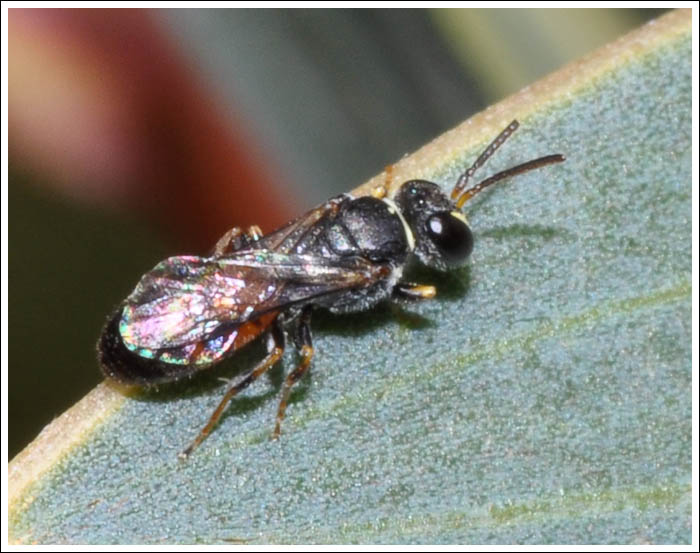
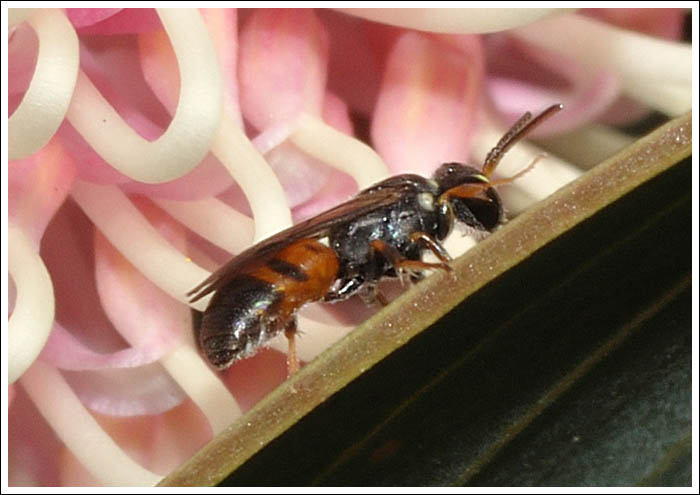
The yellow face identifies this individual as a male.
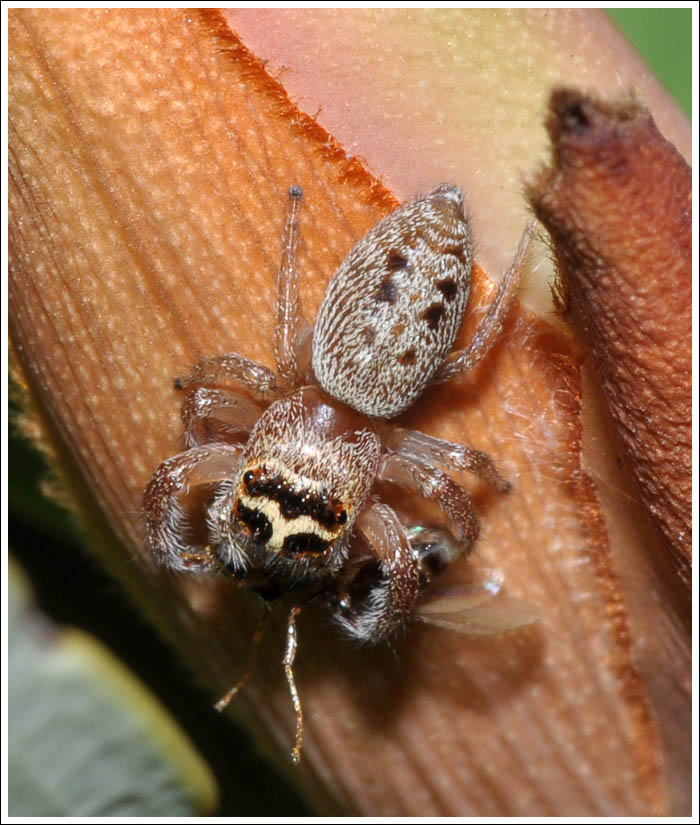
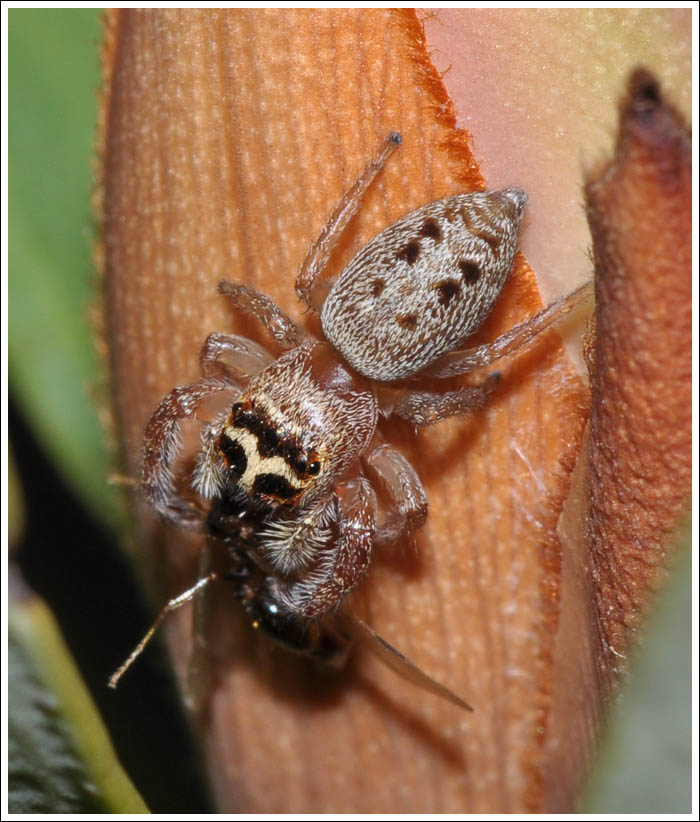
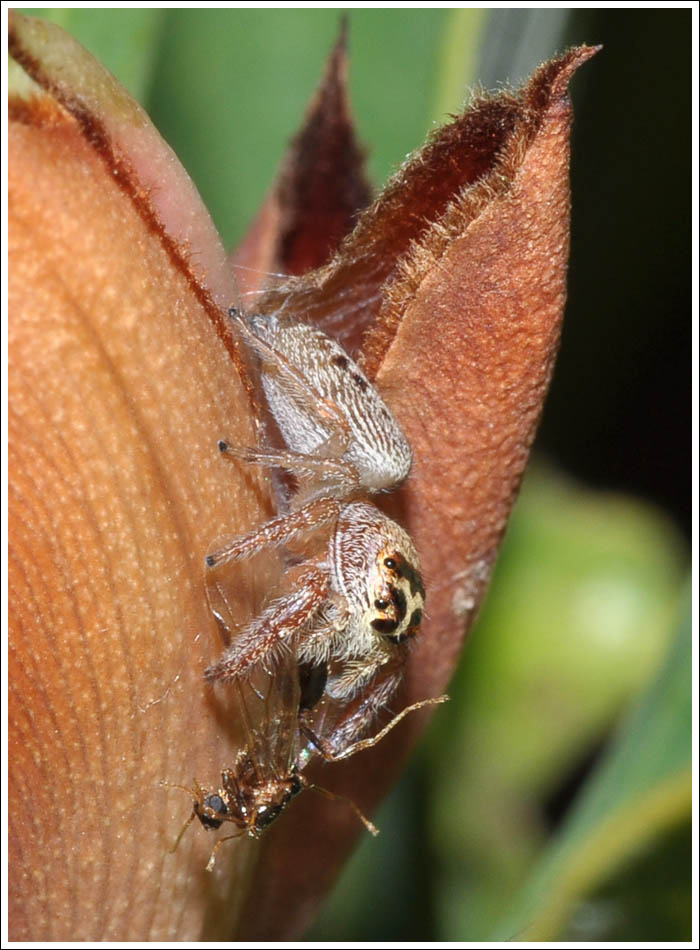
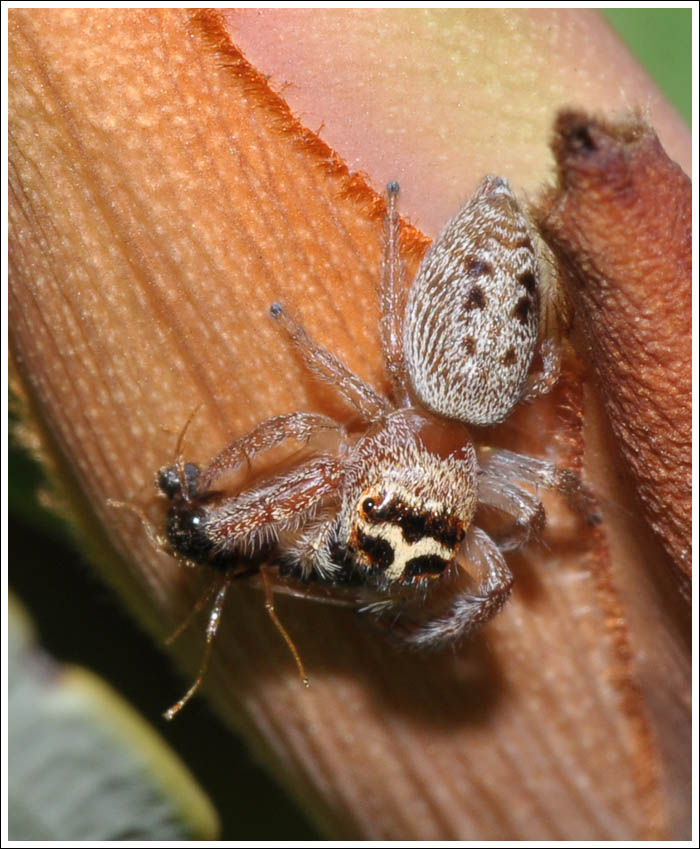
The excellent field guide Spiders of Australia notes that the Salticidae genus Opisthoncus may have more than one hundred Australian species, of which only around thirty have been described. This one was found while watering the Waratah, it had a retreat behind a loose bract from where it had emerged to capture a meal.
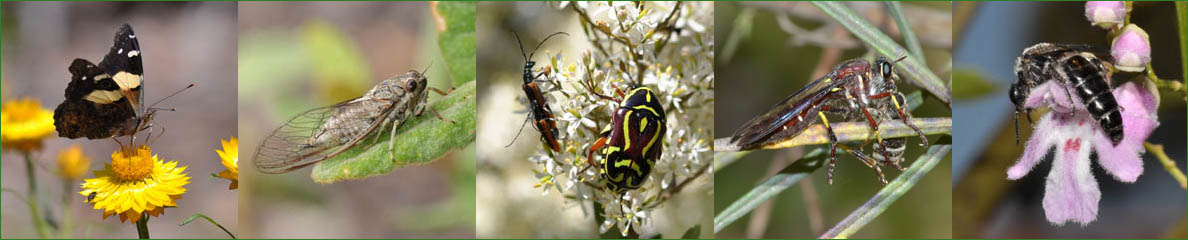
A Mixed Collection.

A feature of autumn in the garden is the venerable Hakea Burrendong Beauty coming into flower with its supply of nectar for the honeyeaters. This shrub is nigh on thirty years old.

A good illustration of pollination in progress.

The Xerochrysums continue to flower and draw in insects, including these small moths.

And the latest correa seedling to appear has its attractive first flowers.

With the weather cooling some different birds are showing up, a brilliant male Golden Whistler, two Grey Shrike-thrushes, an Eastern Spinebill, and on the first cold day with showers, a female Scarlet Robin. The latter is much later than we expect, due no doubt to the extended warm spell keeping them in the high country for longer than usual.

Click to enlarge.